
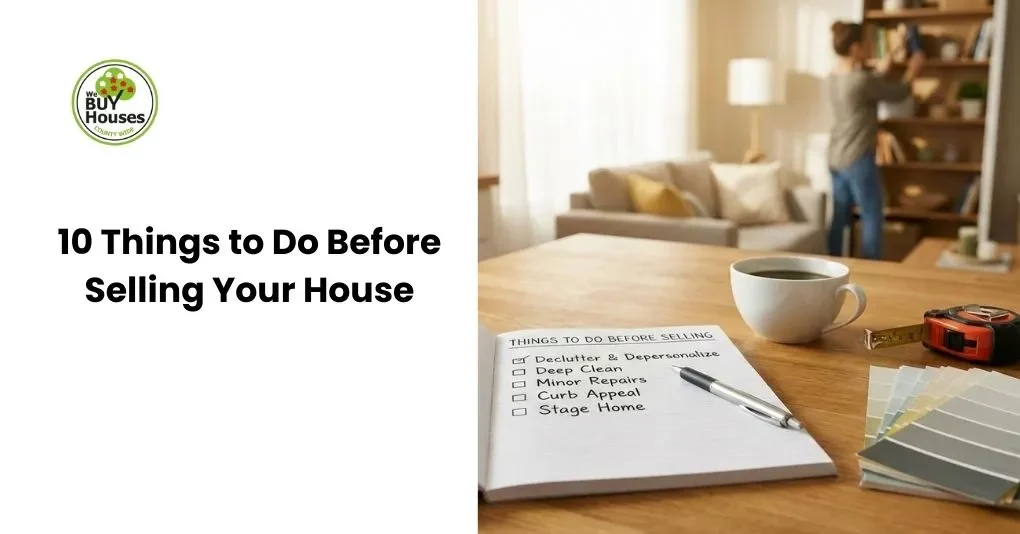
Before listing your house, be sure to handle necessary repairs, set a competitive price, and stage it to attract buyers. To ensure a smooth and successful sale, start by scheduling a pre-sale inspection to uncover any issues, pricing the home using a Comparative Market Analysis (CMA), and completing any necessary repairs to improve its condition. Declutter and depersonalize the space to help buyers envision themselves in your home, and boost curb appeal with simple updates like lawn care and fresh paint.
In addition to these tasks, focus on deep cleaning your home, hiring a professional photographer for high-quality photos, and gathering important documents such as title deeds and disclosure forms. Being flexible with showings will also help attract more potential buyers. By following these steps, you will ensure your home is attractive, market-ready, and positioned for a smooth, successful sale.
1. Get a Pre-Sale Home Inspection
A pre-sale home inspection or pre-listing inspection is a professional evaluation of a property conducted before it is listed for sale to identify any existing or potential issues. It helps homeowners address concerns such as roof damage, plumbing problems, and electrical issues with faulty wiring or outlets before buyers notice them. This proactive approach leads to a smoother sale, reduces last-minute negotiations, and can even increase the final sale price. By fixing problems early or disclosing them upfront, you create a transparent, trustworthy process that builds buyer confidence.
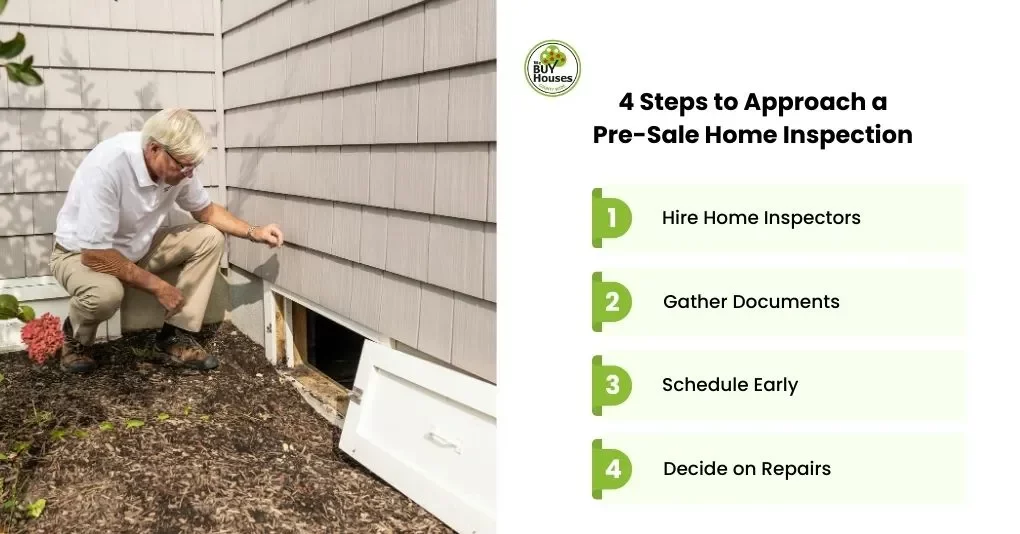
4 Steps to Approach a Pre-Sale Home Inspection:
- Hire Home Inspectors: Look for certified, insured, and reputable inspectors in your area through reputable organizations (like ASHI or InterNACHI).
- Gather Documents: Collect maintenance records and appliance and system warranties.
- Schedule Early: Book home-listing inspection at least a month before listing your home to allow enough time for repairs.
- Decide on Repairs: You can fix major problems, offer repairs, or sell as-is. Just be transparent about any issues you decide to leave unaddressed.
2. Understand Your Home’s Market Value and Set Realistic Expectations
Pricing your home is both a science and a strategic maneuver requiring looking at comparable properties, the local market, and the condition of your home. While every homeowner wants to maximize their net proceeds, overestimating their property’s worth can lead to a stagnant listing, while underpricing can leave significant home equity on the table. To find the right price to attract potential buyers and ensure timely sale, you must look beyond sentimental value and focus on conducting a CMA.
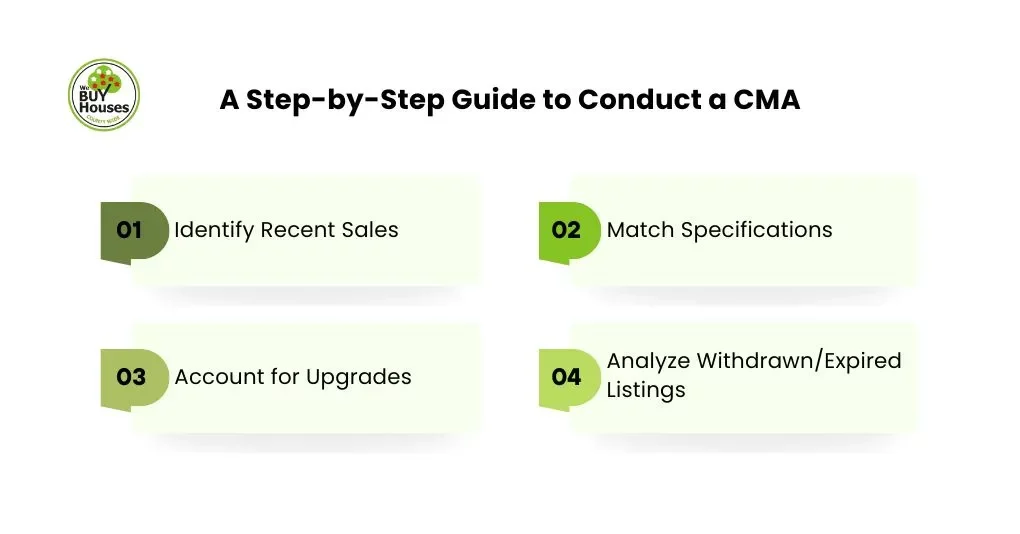
Here is a step-by-step guide to conduct a CMA:
- Identify Recent Sales: Look for homes within a 0.5 to 1-mile radius that sold in the last 3-6 months.
- Match Specifications: Choose homes with similar square footage, number of bedrooms/bathrooms, and lot size.
- Account for Upgrades: Compare the property condition. Does your home have a kitchen remodel while the comp has original 1990s fixtures? Adjust the value accordingly.
- Analyze Withdrawn/Expired Listings: Note homes that did not sell, as these often represent the market’s tolerance ceiling.
Tip: For the most accurate pricing, contact a real estate professional to conduct a CMA. A realtor will have access to the latest market data and can provide valuable insights to ensure you set a price that is both competitive and realistic.
3. Decide How You Want to Sell Your House
When it comes to selling your home, you have a few options, including working with a real estate agent, going For Sale By Owner (FSBO), or selling at an auction. Each of these housing selling methods has its own pros and cons, and the right choice depends on your personal preferences, the market, and your selling goals. However, the method you choose will dictate your level of involvement, the speed of the transaction, and your final net profit.
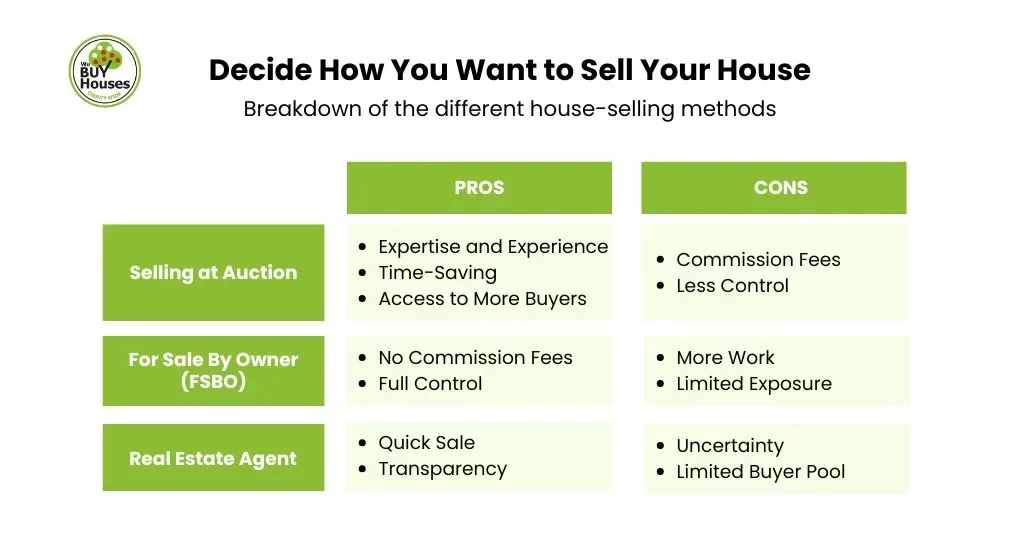
Here is a breakdown of the different house-selling methods:
Selling Through a Real Estate Agent
During this selling process, a licensed real estate agent handles everything from pricing and marketing your home to showinit g to buyers, negotiating offers, and helping you through the closing process.
Pros:
- Expertise and Experience: Real estate agents know the local market, pricing strategies, and how to negotiate with buyers.
- Time-Saving: They handle most of the workload, saving you time and effort.
- Access to More Buyers: Real estate agents can access MLS listings and their own networks of potential buyers.
Cons:
- Commission Fees: Real estate agents typically charge 5-6% of the sale price as their commission.
- Less Control: You rely on the real estate agents to manage the sale process, which means you have less direct control.
For Sale By Owner (FSBO)
With this method of selling your house, you are responsible for managing the sale yourself, from pricing and marketing to showing the property and negotiating with buyers.
Pros:
- No Commission Fees: Since you are not working with an agent, you can save the commission fees (5-6%).
- Full Control: You have complete control over the sale process, pricing, and negotiations.
Cons:
- More Work: You will need to handle everything on your own, which can be time-consuming and stressful.
- Limited Exposure: FSBO listings do not have access to MLS or as many marketing channels as agent-listed properties.
Selling at Auction
During this selling method, you put your home up for auction, and buyers bid on it. The highest bidder wins the property, often at a much quicker pace than traditional sales.
Pros:
- Quick Sale: Auctions are fast and can result in a sale within days.
- Transparency: You know exactly what buyers are willing to pay at the time of the auction.
Cons:
- Uncertainty: There is no guarantee you will get the price you want, as auctions can sometimes end with low bids.
- Limited Buyer Pool: Auctions may attract fewer buyers than traditional listings, especially in more competitive markets.
4. Prepare Financially and Review Your Obligations

Before selling your home, homeowners should understand the financial obligations, including agent fees (typically 5-6% of the sale price), property taxes, repairs or improvements, and title and escrow fees. In some cases, you may also agree to cover a portion of the buyer’s closing costs, which can add to the total cost, so it is important to plan ahead.
To manage these obligations effectively, request a Seller’s Net Sheet early in the selling process to estimate your net proceeds. For example, on a $400,000 sale with a $250,000 mortgage and standard fees, your walk-away cash might be approximately $118,000.
Also consider the tax implications, as many sellers qualify for a capital gains exemption while investment property owners may need a 1031 exchange to defer taxes. Verify that all property taxes, HOA fees, and utility bills are paid to avoid delays. It is also wise to maintain a repair fund of 1-2% of the home’s value for issues uncovered during the home inspection.
5. Declutter and Depersonalize Your Space
Decluttering and depersonalizing are the most cost-effective ways to increase your home’s value by making rooms feel larger and more expansive. By removing personal items and bold decor, you transform your residence into a neutral canvas, allowing prospective buyers to easily envision themselves in the home. This strategy is strongly supported by industry data with research from National Association of REALTORS (NAR) highlighting, 91% of real estate agents identify decluttering as the most common home improvement recommendation they make to sellers, underscoring its powerful impact on buyer perception and overall marketability.

Start by clearing kitchen and bathroom counters and removing oversized furniture that blocks the flow of the home. Apply the 50% rule for storage by emptying half of your closets and cabinets to create the impression of ample space. Repainting walls with neutral tones can make the home feel more inviting.
To make the process manageable, rent a small storage unit and tackle one room at a time. Box up non-essential items for the next 90 days to instantly improve the home’s appeal and give you a head start on your move. These high-impact, low-cost steps will help your home feel move-in ready, reducing your days on market and protecting your equity.
6. Make Necessary Repairs and Improvements

Before listing your house, you must distinguish between necessary repairs that prevent a deal from falling through and cosmetic upgrades that actually boost the asking price. The goal is to spend money only where it will yield a higher sale price or a faster closing, avoiding over-improvement.
Therefore, focus on repairs that provide the most value, such as fresh paint and updated fixtures, while avoiding costly renovations like full kitchen or bathroom remodels unless absolutely necessary. For example, a fresh coat of interior paint typically costs $2,000-$4,000 and can significantly improve first impressions. Updating dated light fixtures or hardware may cost $50-$300 per fixture, yet these small changes modernize a space without a major investment.
On the other hand, costly renovations like full kitchen or bathroom remodels, which can range from $20,000 to $ 50,000+, are rarely necessary before selling. Instead, set a clear repair budget and prioritize improvements that offer the best return on investment without exceeding your limits. This approach ensures you make meaningful updates that protect your equity while positioning your home for a smoother, faster sale.
7. Deep Clean and Stage Your Home
A clean, staged home can significantly boost buyer appeal, leading to a quicker sale and potentially a higher price. A home that smells fresh, looks spotless, and has a well-organized layout evokes a positive emotional response, making buyers more likely to overlook minor flaws and move forward with a strong offer.
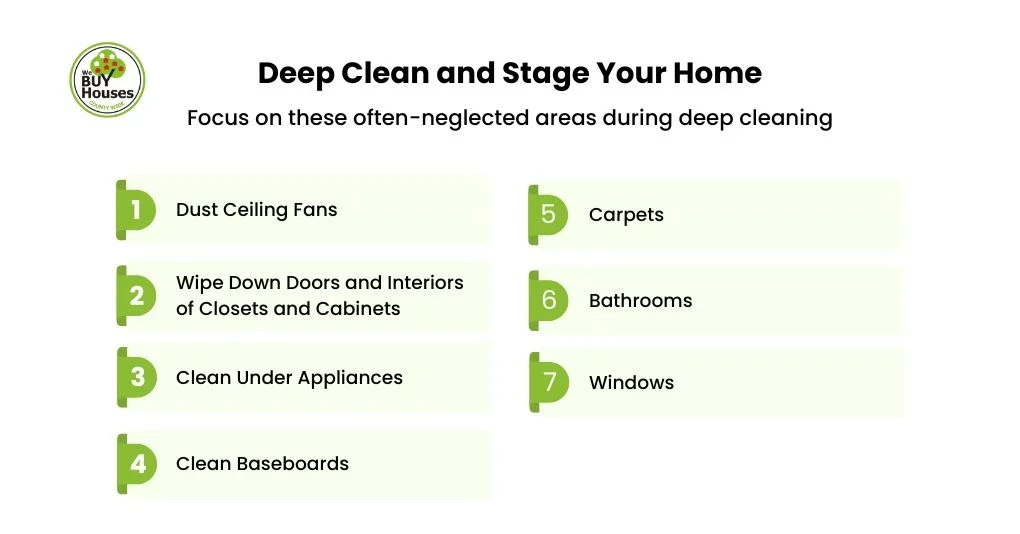
To achieve the best results, focus on these often-neglected areas during deep cleaning:
- Dust Ceiling Fans
- Wipe Down Doors and Interiors of Closets and Cabinets
- Clean Under Appliances
- Clean Baseboards
- Carpets
- Bathrooms
- Windows
Once your home is sparkling clean, staging it is essential to sell it quickly. According to the Home Staging Institute, staged homes sell 73% faster than non-staged ones. When staging, arrange furniture to highlight the space and maximize natural light. Add neutral pillows and throws for comfort, keep counters clear, and add simple touches like a fruit bowl or vase. In bedrooms, use neutral bedding and minimal decor to create a tidy, inviting atmosphere that helps buyers imagine themselves in the space.
8. Boost Your Curb Appeal
First impressions matter, and boosting your home’s curb appeal can make a significant difference in attracting potential buyers. In fact, as stated in The Journal of Real Estate Finance and Economics, tidy landscaping, well-maintained exteriors, and an inviting entryway can sell for an average of 7% more than comparable homes in the same neighborhood. Simple, cost-effective improvements can enhance your home’s exterior and set the tone for the rest of the property.
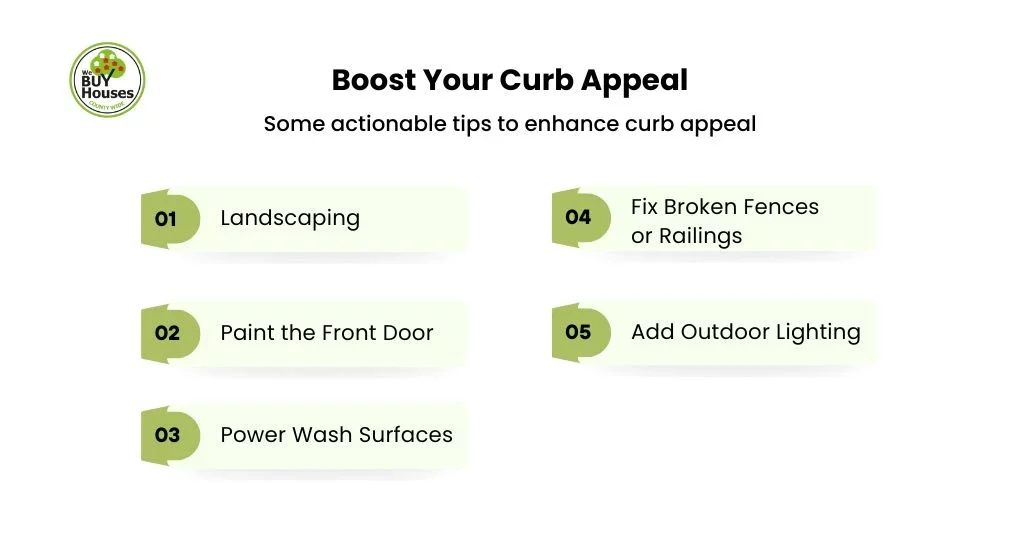
Here are some actionable tips to enhance curb appeal:
- Landscaping: Trim the lawn, prune shrubs, plant fresh flowers, and remove debris. Add mulch to garden beds for a neat look.
- Paint the Front Door: Apply a fresh coat of paint in a bold, welcoming color that complements your home’s exterior.
- Power Wash Surfaces: Clean sidewalks, driveways, and the home’s exterior to remove dirt, grime, and mildew for a fresher home look.
- Fix Broken Fences or Railings: Repair any damaged or broken fencing, gates, or railings to give your home a polished, cared-for appearance.
- Add Outdoor Lighting: Install attractive lighting to highlight key features and enhance the home’s nighttime appeal. Solar-powered lights are an easy and affordable option.
9. Prepare for Marketing and Showings
To attract serious buyers, make sure your home is ready for marketing. Start by hiring a professional photographer, as homes with professional photos sell 32% faster than those with standard listings, according to NAR’s 2024 Market Report. High-quality images highlight your home’s best features and attract more buyer interest. Craft a compelling listing description that focuses on unique selling points, like updated rooms or spacious living areas.

When preparing for showings or open houses, ensure the home is clean, well-staged, and smells fresh. Set the right mood by adjusting lighting and opening windows to create a welcoming atmosphere. Also, be flexible with showing times to accommodate potential buyers’ schedules.
10. Gather Important Documents in Advance
By gathering everything, including property deed, tax records, and maintenance records early, you show transparency to buyers and ensure that your real estate lawyer or title company can handle the title transfer without delays. Having your documents ready also prevents last-minute scrambling and keeps the process on track, saving you time and avoiding unnecessary stress.
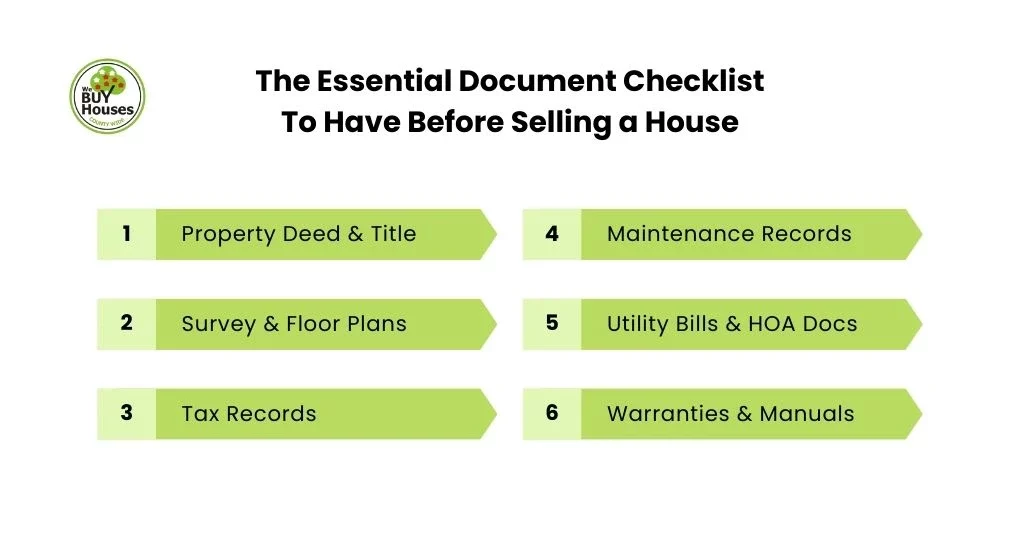
The Essential Document Checklist To Have Before Selling a House:
- Property Deed & Title: Proof of ownership and a clear title search are mandatory for any legal sale.
- Survey & Floor Plans: These clarify property boundaries and help verify the exact square footage.
- Tax Records: Gather recent tax assessments and property tax bills to provide proof of your property’s value and taxes.
- Maintenance Records: Receipts for your roof repair, HVAC service, and any major renovations demonstrate that the home has been well-maintained.
- Utility Bills & HOA Docs: Provide a cost-of-living snapshot for the buyer, including HOA fees and recent water/electric averages.
- Warranties & Manuals: Gather information for the appliances and systems that will remain with the house.
Additional Considerations When Preparing Your Home for Sale
When preparing your home for sale, consider additional factors like timing, emotional readiness, and legal requirements. Make sure to set a reasonable pre-listing inspection and be prepared for the emotional aspects of parting with your home. Organize the necessary documents, such as disclosure forms, to ensure compliance with legal obligations.
What Not to Do Before Selling
Before selling your house, avoid major renovations, overpricing, skipping decluttering, or neglecting essential repairs, as these common mistakes can cost you money, scare buyers, or delay the sale.
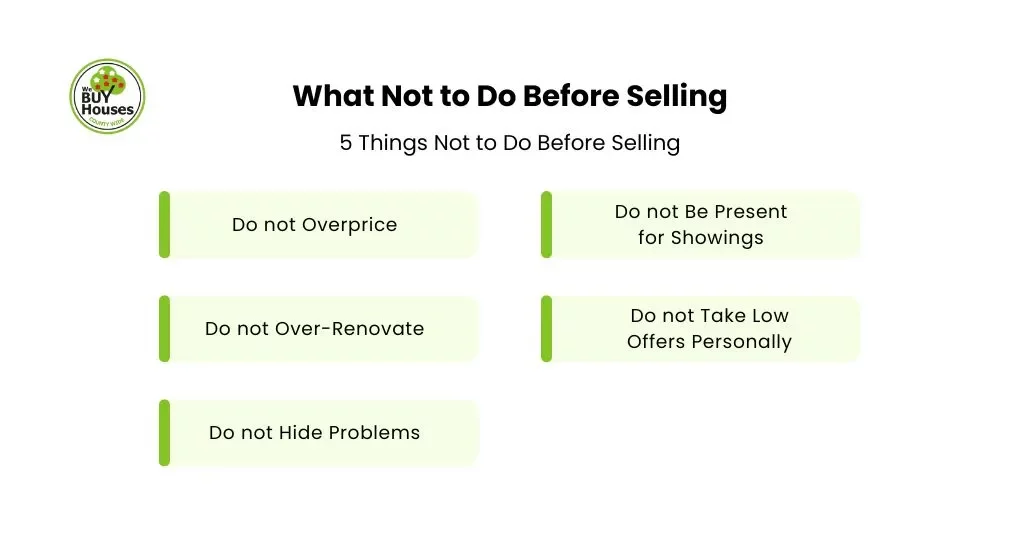
5 Things Not to Do Before Selling:
- Do not Overprice: Setting the price too high can scare off buyers. Pricing competitively based on market data is key.
- Do not Over-Renovate: Do not install a $50,000 luxury kitchen if the comparable sales in your area do not support it. You likely will not see a proper ROI despite these changes.
- Do not Hide Problems: Using a rug to cover a floor stain or painting over mold without fixing the source will only backfire during the home inspection.
- Do not Be Present for Showings: Buyers feel awkward and rushed when the owner is home. Leave the property so they can speak freely with their buyer’s agent.
- Do not Take Low Offers Personally: An offer is a starting point for negotiation, not a critique of your lifestyle.
Pre-Sale Preparation Timeline
Preparing your home for sale involves a clear timeline that begins months before listing. Start with key tasks such as selecting an agent, handling major repairs, and decluttering. As you get closer to listing, shift your focus to deep cleaning, staging, and minor repairs. Here is a step-by-step guide to help you plan and stay on track in the months ahead.
3-6 Months Before Listing
Start by scheduling a pre-listing inspection to uncover any structural issues, HVAC needs, or hidden problems. This gives you time to address major repairs, such as roofing, plumbing, or electrical issues, without the pressure of a looming deadline. Additionally, begin decluttering storage-heavy areas, such as the attic and garage, and move non-essentials off-site. This will make your home feel more spacious and showcase its full square footage.
1-2 Months Before Listing
In this stage, focus on fine-tuning your home’s appeal and preparing a solid marketing plan. Start by interviewing real estate agents and reviewing their CMAs to set a competitive asking price based on current market conditions. Focus on high-impact cosmetic updates, like applying neutral paint colors and replacing dated fixtures, to make the home feel fresh and modern. At the same time, begin staging the home to optimize room flow and create a move-in-ready atmosphere that feels aspirational to potential buyers.
2-4 Weeks Before Listing
As you approach listing day, focus on finalizing your home’s presentation. Hire a deep cleaning service to clean windows, carpets, and grout, ensuring the home is spotless. Schedule professional photography on a bright day, ensuring your curb appeal is at its best with a freshly mowed lawn and a clean front door. Organize your disclosure forms and maintenance records into a Seller’s Binder for easy access. Finally, do a buyer’s eye walkthrough to catch and fix any minor defects, ensuring your home makes a flawless first impression.
Get Your Home Sale-Ready
To make your home more appealing to buyers, focus on final preparation tasks like deep cleaning, staging key rooms, and addressing any last-minute repairs. Ensure the home is physically and emotionally ready for sale by cleaning carpets, scrubbing bathrooms, and wiping down surfaces to create a spotless, welcoming atmosphere.
Additionally, stage the living areas to highlight the home’s potential and flow, making it easier for buyers to imagine themselves living there. Be flexible with showing times to increase opportunities for interested buyers. These simple steps can lead to a faster sale and higher offers, helping you secure the best possible price for your home.