
To negotiate successfully when selling a home, understand market conditions, set clear financial goals, and gather intelligence on potential buyers. Negotiation goes beyond agreeing on a price, as sellers should also focus on key elements such as repairs, contingencies, closing costs, and the closing date. Special selling situations, such as inherited properties, divorce sales, short sales, and luxury homes, require tailored strategies.
Advanced negotiation techniques, like leveraging market data, creating competition, and using silence strategically, can significantly increase leverage. Preparation, flexibility, and knowing when to walk away are crucial for securing the best deal. By mastering these strategies, sellers can confidently navigate the negotiation process and maximize their sale price while protecting their financial interests.

What Should You Understand Before Starting Negotiations?
Before negotiating a house sale, understand the market (seller’s or buyer’s market, trends, comps), set a clear bottom line (minimum price), and gather intelligence on potential buyers (financial situation, motivations). This helps build leverage and allows sellers to approach negotiations strategically, highlight your home’s unique selling points, and stay calm, focusing on win-win solutions rather than getting emotional. Additionally, successful negotiation involves research, setting clear goals, active listening, and knowing when to walk away.
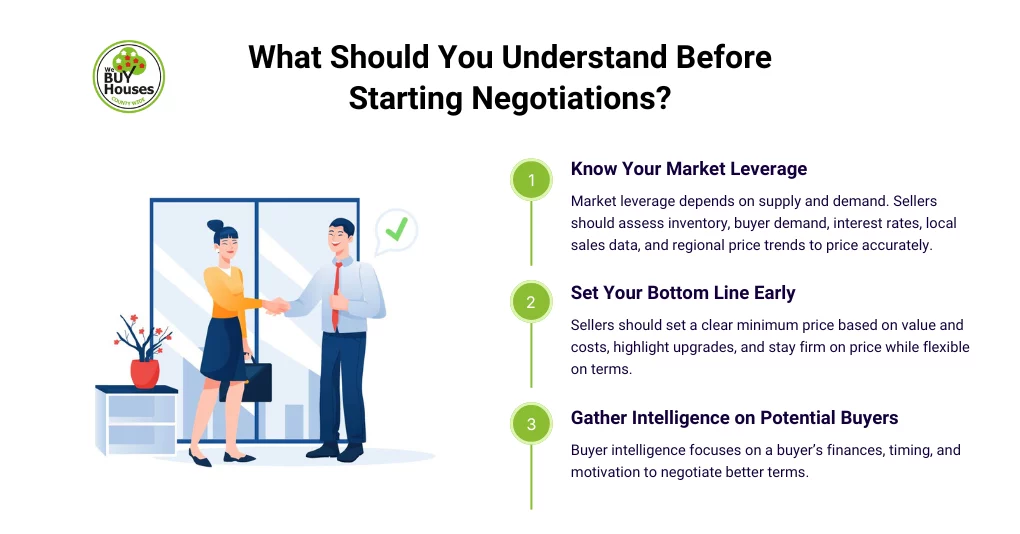
Know Your Market Leverage
Market leverage refers to the advantage a seller has based on supply and demand, which plays a crucial role in shaping their negotiating position. In a seller’s market, where demand exceeds supply, sellers are in a stronger position to negotiate higher prices and more favorable terms. In contrast, in a buyer’s market, where there are more properties than buyers, sellers need to be more flexible on price and terms. To assess their market leverage, sellers should consider factors like inventory levels, buyer demand, and interest rates.
Additionally, researching comparable properties (comps) in your area is essential because it helps you understand what similar homes have actually sold for. This gives you a more accurate idea of your home’s market value and of what buyers are willing to pay. It is also important to monitor local market trends, as conditions can vary significantly from national averages. For instance, while the national median home price is around $410,800, California’s median home price exceeds $910,000.
Set Your Bottom Line Early
Setting a bottom line, or the minimum price a seller is willing to accept, is essential to avoid emotional decisions that could compromise financial goals. Sellers should assess their home’s market value, consider current market conditions, and factor in costs such as closing fees, repairs, and real estate agent commissions (typically 5-6%). This helps ensure that sellers stay focused and have a proper Walk-Away Price calculation, ensuring they do not settle for less than they are comfortable with.
Additionally, sellers should highlight upgrades, such as a new roof, renovated kitchen, or great location, that add value and appeal to the property, helping justify the price. With a clear bottom line, sellers can remain firm on price while staying flexible on other terms, such as contingencies or closing dates. This proactive approach allows sellers to maintain control over the negotiation process and protects their financial interests.
Gather Intelligence on Potential Buyers
In any high-stakes negotiation, information is the most valuable currency. Buyer intelligence is the strategic process of uncovering who your potential buyers are, what specific needs they have, and what is driving their desire to purchase. By understanding the why behind an offer, you move away from guesswork and toward a tailored negotiation strategy that increases your chances of securing favorable terms.
Gathering this intelligence requires a mix of observation, direct questioning, and professional collaboration. You should focus on three critical areas:
- Buyer’s financial strength
- Buyer’s timeline constraints
- Buyer’s underlying motivations
For instance, look beyond the offer price to see if the buyer is pre-approved or paying cash. Similarly, identifying time-sensitive pressures such as a lease expiration or a job relocation can reveal a buyer who is more willing to concede on price or repairs to ensure a guaranteed closing. By understanding the buyer’s motivations, sellers can craft more strategic responses, such as adjusting the price, offering concessions, or negotiating on terms like closing dates.
What Is the Step-by-Step Home Selling Negotiation Process?
To secure the best deal when selling a house, the negotiation process requires a series of strategic, interconnected steps beginning with understanding market conditions and setting clear financial goals. Sellers should price their home strategically using a Comparative Market Analysis (CMA), assess the buyer’s initial offer, and position the home to attract high-value bids. Once an offer arrives, evaluate it holistically before crafting a counteroffer to refine terms. By managing concessions professionally and recognizing deal-breakers, sellers protect their financial interests and ensure a successful closing.
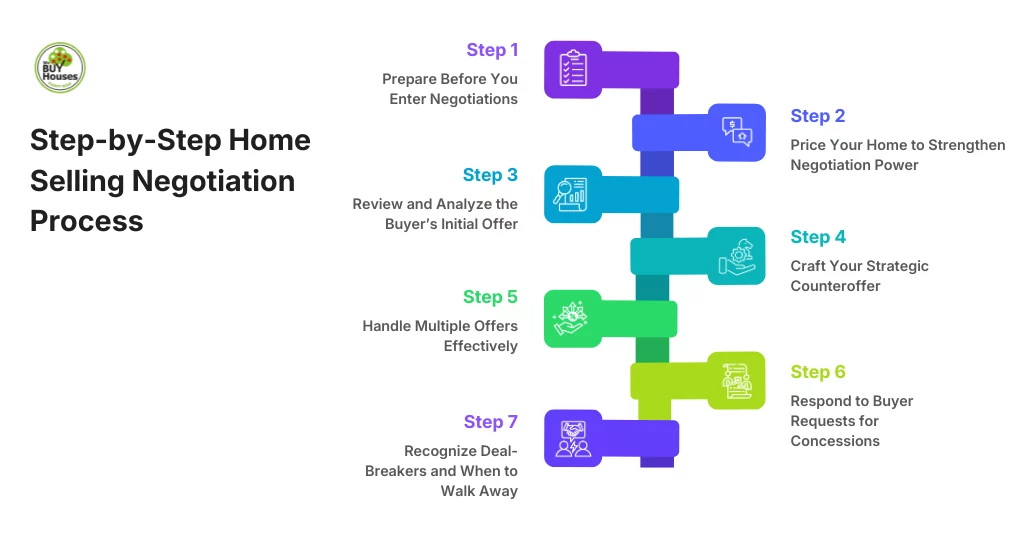
Step 1: Prepare Before You Enter Negotiations
Start by evaluating current market conditions to understand your leverage and set clear financial goals. Ensure your home is in peak condition, as a well-maintained property justifies a higher asking price. Gather essential documents, such as recent comparable sales and inspection reports, to support your position. Being organized and well-informed helps you avoid being overwhelmed by aggressive buyer demands, giving you confidence throughout the negotiation process.
Step 2: Price Your Home to Strengthen Negotiation Power
A well-priced home, based on a CMA, attracts serious buyers and generates immediate interest. Overpricing can lead to a stagnant listing, weakening your negotiating position, while underpricing risks leaving money on the table. By setting a realistic, data-driven price based on market demand, you demonstrate professionalism and encourage competitive offers, placing the negotiation power firmly in your hands.
Step 3: Review and Analyze the Buyer’s Initial Offer
When the first offer arrives, look beyond the purchase price and evaluate the deal as a whole. Consider the buyer’s earnest money deposit, their financing pre-approval, and any contingencies that might delay or derail the sale. Assess their proposed closing timeline and how well it aligns with your plans. By considering all factors, you can determine whether the offer is solid or if a significant counteroffer is needed to meet your objectives.
Step 4: Craft Your Strategic Counteroffer
A strategic counteroffer allows sellers to adjust the terms to better suit their needs while keeping the buyer engaged. Use this stage to adjust not just the price, but also the length of inspection periods or specific closing dates. A well-crafted counteroffer demonstrates your willingness to move forward while maintaining control over the contract terms.
Step 5: Handle Multiple Offers Effectively
Receiving multiple offers creates an ideal competitive environment that you must manage with transparency and professionalism. Review each bid for overall cleanliness, prioritizing high-priced offers with fewer contingencies. Communicate clearly with all parties to encourage their highest and best terms, using the competition to drive up the sale price. This approach allows you to choose the most reliable buyer who offers the best financial gain and the fewest hurdles.
Step 6: Respond to Buyer Requests for Concessions
After an inspection, buyers may request concessions, such as price reductions or repairs. As a seller, you should carefully consider these requests and decide whether to agree to repairs, offer credits, or negotiate other terms. Maintaining flexibility while staying aligned with their goals is key to closing the deal. A solution-oriented approach strengthens the seller’s position without compromising too much.
Step 7: Recognize Deal-Breakers and When to Walk Away
While closing the sale is the goal, you must recognize when a deal no longer serves your interests. Identify red flags, such as a buyer who cannot secure financing or someone making unreasonable repair demands. Trust your pre-set bottom line and be prepared to walk away if the terms become unfavorable. Protecting your financial health is more important than a quick sale; sometimes, saying no leads to a better buyer.
What Should You Negotiate When Selling Your House?
When selling your house, negotiate purchase price, repairs, contingencies, closing costs, timeline flexibility, and personal property to shape the final deal. Each of these aspects impacts both the financial and logistical outcome. By negotiating strategically on these elements, sellers can maximize their sale price and secure favorable terms.
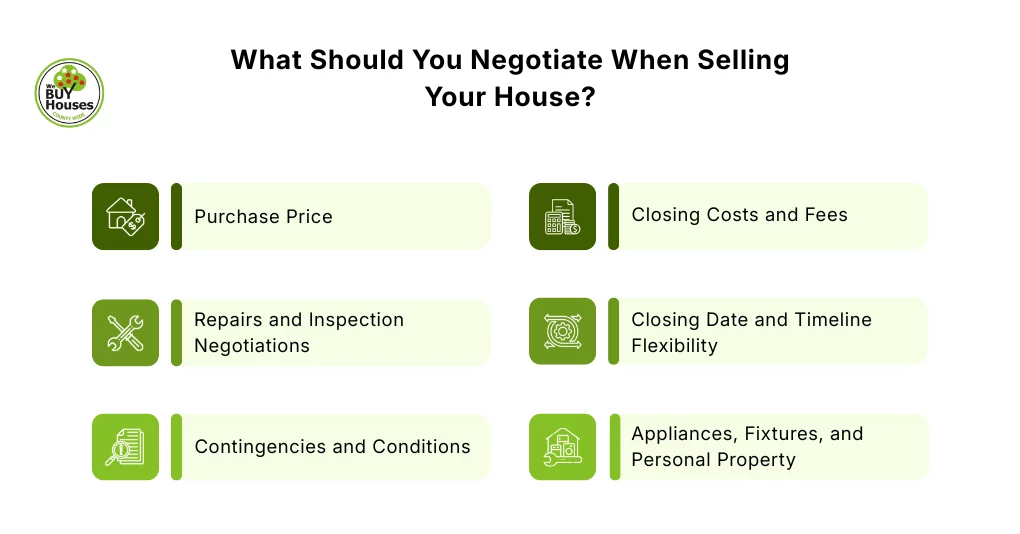
Purchase Price
The purchase price is the foundation of your deal, but it must be viewed alongside other costs. To negotiate effectively, rely on recent sales data of similar homes nearby to justify your position. In a strong seller’s market, you might hold firm on a higher price, whereas in a slower market, you might accept a slightly lower offer to ensure a faster sale. Always remain flexible enough to consider counteroffers that stay within your predetermined financial range.
Repairs and Inspection Negotiations
After a home inspection, buyers often request repairs or price reductions. Approach these requests with a solution-oriented mindset. Instead of managing contractors yourself, consider offering a cash credit at closing. This saves you time and limits your liability for the quality of the work. Prioritize essential safety or structural repairs and negotiate on cosmetic issues to keep the transaction moving forward without overextending your budget.
Contingencies and Conditions
Contingencies are escape clauses that allow buyers to back out of or renegotiate the deal if certain conditions, such as financing or a home sale, are not met. Negotiating for fewer or shorter contingency periods reduces your risk and ensures a more certain path to closing. In a competitive real estate market, you have the leverage to ask buyers to waive or limit these conditions, protecting you from the deal falling through at the last minute.
Closing Costs and Fees
Closing costs include various taxes and administrative fees, such as transfer taxes required to finalize the sale. While buyers usually cover their own costs, they may ask you to contribute a percentage, typically 1% to 3% of the purchase price, depending on the loan type and market conditions. You can use these contributions as a bargaining chip. For example, you might agree to pay a portion of their closing costs in exchange for a higher overall purchase price or a faster closing date.
Closing Date and Timeline Flexibility
Offering flexibility on the closing date can make your offer more appealing to buyers, especially if they have specific timing needs, like moving in quickly. While price is crucial, flexible timing can help attract higher bids. Consider your own situation and determine when flexibility benefits you. Being adaptable with the closing date can help secure a deal that works for both parties, but be clear about your preferred timeline.
Appliances, Fixtures, and Personal Property
Items like refrigerators, washers, and even outdoor sheds are not always included in a home sale, making them prime candidates for negotiation. Clearly define what stays and what goes before listing to avoid confusion. You can offer to include high-end appliances or custom furniture to sweeten a deal or use them as a compromise when you want to remain firm on the purchase price.
When Should You Negotiate During the Home Selling Process?
You should negotiate at the pre-listing phase, upon receipt of initial offers, during the counteroffer exchange, after the home inspection results, when appraisal issues arise, and at the final walk-through. Each of these stages offers a key opportunity to adjust terms, address buyer requests, and ensure the deal aligns with your goals. Timing your negotiations strategically throughout the process helps you secure the best outcome.
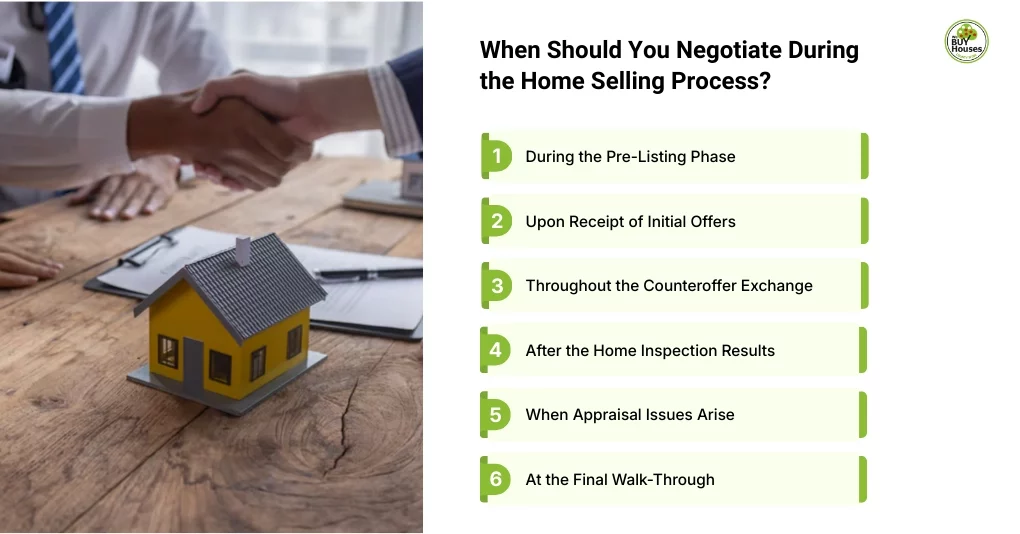
During the Pre-Listing Phase
The pre-listing phase is the first opportunity to lay the groundwork for successful negotiations. Sellers should research the market, set a competitive asking price, and prepare the property by making necessary repairs. This stage also involves organizing documents such as appraisals and inspection reports to streamline negotiations once offers are received. Proper preparation in this phase can help sellers avoid delays and set the tone for a smoother negotiation process.
Upon Receipt of Initial Offers
When an offer arrives, evaluate it promptly to keep the momentum alive. Look beyond the purchase price and assess the contingencies, the buyer’s financial strength, and the requested closing timeline. A fast response demonstrates professionalism and keeps the buyer engaged, allowing you to quickly determine if the proposal is a solid starting point or needs significant adjustment.
Throughout the Counteroffer Exchange
The counteroffer exchange is an opportunity for sellers to negotiate terms that better meet their needs. Sellers should evaluate which aspects they can compromise on (such as closing dates) and which they need to stand firm on (such as price). A strategic counteroffer ensures sellers maintain control and can move the deal forward, particularly when multiple offers are involved.
After the Home Inspection Results
Post-inspection negotiations are often the most delicate phase, as they involve requests for repairs or price reductions. Review the inspection report thoroughly to distinguish between major structural issues and minor cosmetic flaws. You must decide whether to perform the repairs yourself or offer a closing credit. Remaining solution-oriented at this stage is vital to keeping the deal intact without making excessive financial sacrifices.
When Appraisal Issues Arise
If the appraisal comes in lower than the agreed price, sellers need to act strategically. They can challenge the appraisal if there are errors or discrepancies, or they may need to reduce the price to keep the deal viable. Offering to split the difference in price can be a fair compromise that helps move the sale forward while protecting the seller’s interests.
At the Final Walk-Through
The final walk-through is the last chance to ensure the home is in the agreed-upon condition. Sellers should address any last-minute issues or repairs the buyer raises. Remaining flexible and solution-oriented at this stage helps resolve lingering concerns and ensures a smooth closing. It is important to stay calm and professional, as this is often the final negotiation before the deal is closed.
What Are the Advanced Negotiation Tactics for Home Sellers?
Advanced negotiation tactics for home sellers include creating urgency, being patient, utilizing market data, and standing firmly when needed. These strategies go beyond the basics and are essential for maximizing sale price and securing favorable terms. By leveraging multiple offers, using silence to your advantage, and supporting your pricing with solid data, sellers can create a competitive environment, increase buyer pressure, and ensure they are making informed, strategic decisions throughout the negotiation process.
Create Competition and Urgency
Creating competition and urgency can significantly drive up your sale price. Leverage multiple offers by encouraging buyers to submit their highest bids. According to the National Association of Realtors (NAR), homes that receive multiple offers often sell for a premium, with around 20-25% of recent sales involving bidding wars that push prices above the original list price. Using scarcity tactics, such as saying, “I am expecting another offer soon,” creates a sense of urgency and heightens buyer interest. By applying these strategies, you increase buyer pressure, leading to better offers and more favorable terms.
Use Silence and Patience Strategically
In negotiations, the party that speaks least often holds the most power. After delivering a counteroffer, resist the urge to follow up or explain your reasoning. Instead, use silence to force the buyer to make the next move. This patience communicates that you are confident in your home’s value and are not desperate to close. By allowing the buyer space to re-evaluate their position, you often prompt them to return with a more favorable response.
Leverage Market Data to Your Advantage
When a buyer tries to negotiate a lower price, provide a CMA showing that similar homes recently sold for your asking price. During this, the data acts as an objective shield against unreasonable demands. Additionally, highlighting current market trends, such as low inventory or rising demand, provides a factual justification for your stance. Relying on hard numbers rather than personal opinion makes it difficult for buyers to argue, keeping the negotiation grounded in reality.
Know When to Stand Firm
Using market data is crucial for strengthening your negotiating position, as a CMA can show how your home compares to recently sold properties, justifying your asking price. Understanding current market trends, such as inventory levels and buyer demand, can further support your pricing decisions. Additionally, knowing the buyer’s motivations, whether driven by interest rates, relocation, or family needs, can help tailor your offer to match their urgency and increase your chances of success.
What Are the Most Common Home Selling Negotiation Mistakes?
The most common home-selling negotiation mistakes many seller makes are overpricing, letting emotions drive decisions, responding too slowly, being inflexible on terms, and failing to prepare adequately. While negotiations can be challenging, many home sellers inadvertently make mistakes that can break the deal. Therefore, by recognizing and avoiding these mistakes, sellers can approach negotiations confidently, increasing their chances of a favorable outcome.
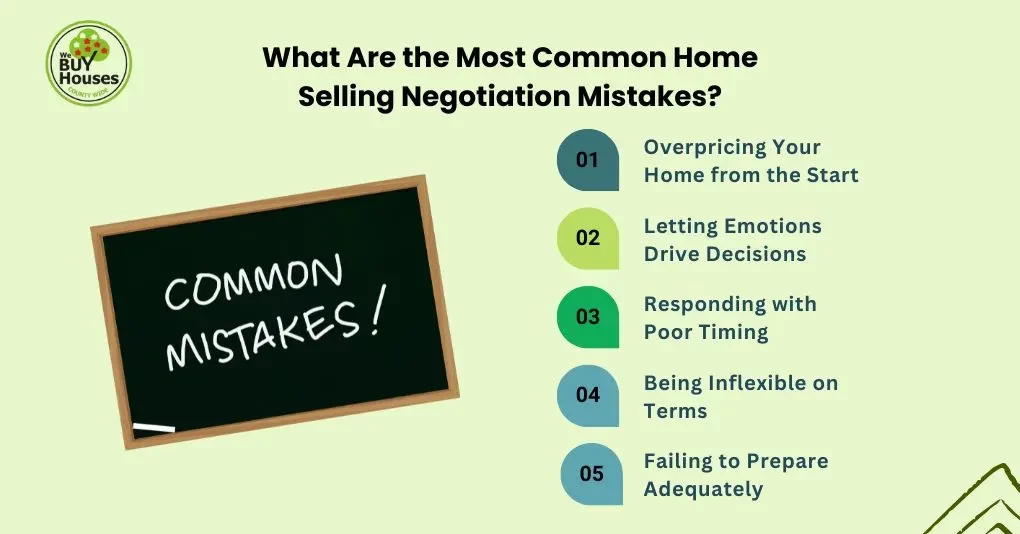
Overpricing Your Home from the Start
Setting an unrealistically high price often discourages buyers and prolongs time on the market. This can result in price reductions later, which may hurt negotiations. Sellers should research comps and understand the market conditions to set a competitive price from the start. A well-priced home attracts more buyers and increases the likelihood of receiving better offers.
Letting Emotions Drive Decisions
Emotional attachment to a property can lead sellers to overvalue their home or take offense at a fair offer. To avoid this, sellers should define a clear financial bottom line before listing and view each offer as a business decision. Relying on a trusted agent’s guidance provides an objective perspective, helping sellers make decisions based on market realities rather than sentimental value.
Responding with Poor Timing
Delaying responses to offers or counteroffers can result in losing a potential buyer or missing out on a better offer. According to RubixOne, responding to real estate leads within 5 minutes makes agents 100 times more likely to convert them than waiting longer. Sellers should respond promptly to demonstrate seriousness and keep the buyer engaged. However, they should also take time to evaluate offers carefully to ensure they meet their needs. Being aware of buyers’ deadlines can help sellers make timely, informed decisions without feeling pressured.
Being Inflexible on Terms
Sellers who refuse to budge on minor terms, such as a specific move-out date or a small repair credit, often lose out on high-quality buyers. Flexibility can be used strategically, for instance, by conceding on a closing date to maintain your firm stance on the purchase price. Knowing which terms are nice-to-haves versus must-haves allows you to adapt to buyer needs without sacrificing your overall goals.
Failing to Prepare Adequately
Failure to prepare for negotiations is one of the most detrimental mistakes a seller can make. Without understanding the market, knowing your home’s value, or having the necessary documents ready, sellers are at a disadvantage. Sellers should stay informed about local market trends, ensure the home is in show-ready condition, and organize documents such as inspection reports and a CMA. Proper preparation ensures sellers can make informed decisions and confidently navigate the negotiation process.
Should You Work with Professionals or Go FSBO?
Choosing between working with a real estate agent or selling your home as a For-Sale-By-Owner (FSBO) depends on your goals, available time, and willingness to manage the process. While an agent brings expertise in pricing, marketing, and negotiations, going FSBO allows you to save on commission fees but requires you to handle all aspects of the sale. Therefore, weighing the pros and cons of working with professionals and FSBOs helps you decide whether to sell a house by yourself or with a realtor.
Understanding the Real Estate Agent’s Role in Negotiations
A real estate agent brings valuable expertise to negotiations, handling offers, counteroffers, and other tricky elements that can be overwhelming for sellers to navigate alone. Agents help set competitive prices based on market trends, evaluate offers considering contingencies and financing, and negotiate repairs or concessions to keep the deal moving. In complex negotiations, agents mediate between the buyer and seller, ensuring both parties reach a mutually beneficial solution. While there is often a 5-6% commission fee, a skilled agent advocates for your interests and helps you achieve the best possible sale price.
Negotiating as a For-Sale-By-Owner (FSBO)
Selling as an FSBO allows you to save on commission fees, but it requires a strong understanding of the real estate market, buyer psychology, and negotiation tactics. As an FSBO seller, you sell your house without a realtor, which means you need to set a competitive price using tools like a CMA and evaluate offers carefully, considering not just price but also contingencies and buyer qualifications. You will also need to manage negotiations on repairs or price reductions after inspections and handle the legal paperwork. Going FSBO can be a viable option for knowledgeable sellers, but it requires preparation and diligence to navigate the complexities of the process.
Knowing When to Bring in Additional Professionals
Even if you choose to go FSBO, there are times when additional professionals can make a big difference. Real estate attorneys can help with complex contracts or legal issues, while appraisers can provide independent valuations when there is a dispute over your home’s worth. If there are concerns about the property’s condition, a pre-listing inspection can identify potential problems early. Financial advisors can also offer guidance on structuring the deal and handling the proceeds. Engaging experts at the right time can ensure smooth transactions and help you achieve the best outcome.
How Do You Negotiate Special Selling Situations?
When negotiating special selling situations like inherited properties, divorce sales, or luxury homes, it is crucial to focus on thorough research, active listening to understand underlying needs, and building value beyond just price. While the fundamental principles of negotiation remain the same, these situations often involve unique emotional, legal, and financial complexities that can significantly affect the process. Managing these factors with care and strategy ensures a smoother and more successful negotiation.
Inherited Property Sales
Negotiating the sale of an inherited property can be complicated due to emotional and legal factors. Sellers should ensure all heirs are in agreement and that necessary legal documentation is in place. It is important to maintain clear communication with all parties involved to avoid conflicts and misunderstandings. When selling an inherited house, sellers should also be prepared for the possibility of a probate sale, which may affect timelines and conditions. Consulting an attorney or real estate professional can help ensure a smooth process.
Divorce-Related Sales
Selling a property due to divorce can involve both emotional and financial challenges. Sellers should clarify their financial goals early on and ensure both parties agree on the sale price and terms. Open and professional communication is essential to prevent conflicts. Seeking help from a real estate agent and a divorce attorney can help protect both parties’ interests and ensure a fair division of assets. Therefore, professional guidance is key to navigating the complexities when selling a house during divorce.
Short Sales and Financial Distress
Short sales occur when sellers need to sell their property for less than the amount owed on the mortgage, often due to financial distress. Sellers should understand the lender’s criteria for approving a short sale and gather the necessary documentation to prove financial hardship. Setting realistic expectations is essential, as the sale price may not cover the entire mortgage balance. Working with a real estate agent experienced in short sales and a financial advisor can help navigate the complexities of this process.
Luxury or Unique Properties Sales
Luxury homes often attract a smaller pool of qualified buyers, making negotiations more intense and time-consuming. Buyers at this level are often represented by sophisticated agents and will scrutinize custom features and high-end finishes. Your strategy should focus on scarcity, highlighting the property’s one-of-a-kind aspects to justify a premium price. Be prepared for longer negotiation periods and hold firm on price if the data supports your home’s unique value.
Master Home Selling Negotiations for Maximum Success
Home-selling negotiation mastery involves understanding buyer motivations, timing your moves, and using strategic techniques to drive the best outcome. Additionally, mastering home-selling negotiations is key to maximizing your sale price and securing favorable terms. While many sellers focus on setting a price and accepting offers, successful negotiations require much more than simply agreeing on a number.
Advanced Strategies for Successful Home Selling Negotiations
- Prepare Strategically: Preparation involves more than understanding market trends. Sellers should understand buyer psychology, set clear objectives, and make their home as appealing as possible to potential buyers.
- Leverage Negotiation Techniques: Use advanced strategies such as creating urgency, strategically using silence, and building rapport with buyers to achieve favorable outcomes in negotiations.
- Use Data to Support Your Position: Leverage real estate data, such as a comparative market analysis (CMA), to justify your pricing and negotiate from a position of strength.
- Be Flexible When Necessary: While it is essential to stand firm on key terms, flexibility on elements like timing, repairs, and concessions can keep the deal moving forward without compromising your primary goals.
- Know When to Walk Away: Skilled negotiators know when to decline an offer or walk away when terms do not align with their bottom line. This decision helps sellers protect their interests.