
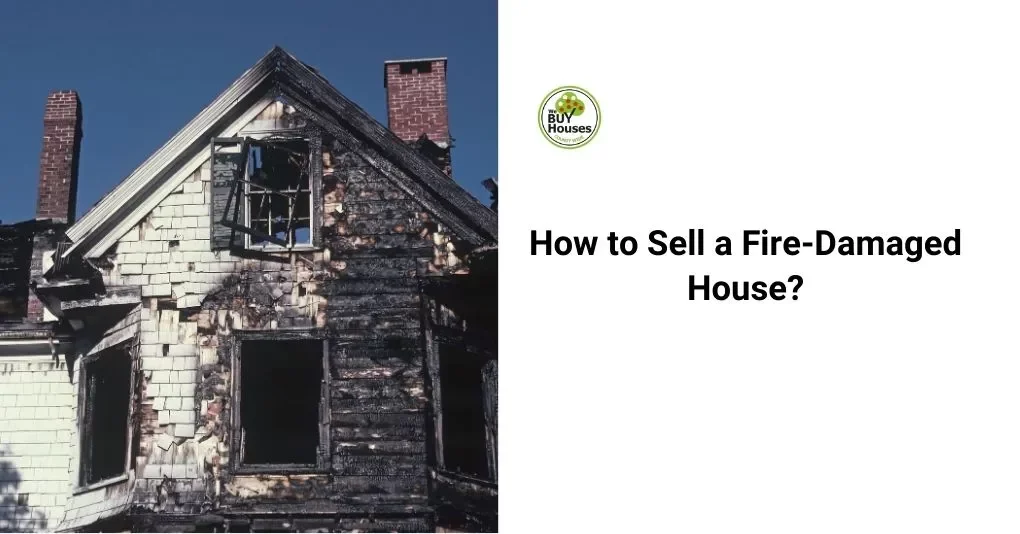
You can sell a fire-damaged house by either repairing it for a higher price or selling it as-is to a specialized buyer, such as an investor, for a quicker, simpler sale at a lower price. Repairs may require significant time and money, while selling as-is offers a faster exit but at a reduced price. Also, when selling as-is, buyers may include real estate investors, cash buyers, iBuyers, specialized agents, and auction buyers. Investors and house flippers seek properties to renovate and profit from, while cash buyers prefer quick transactions.
This decision depends on factors such as your finances, the extent of the damage, and how quickly you need to sell. Regardless of your choice, full disclosure of fire damage and insurance claims is legally required. Therefore, working with a real estate agent or financial advisor can help you choose the best approach for selling a fire-damaged house based on your needs and goals.
How to Sell a Fire-damaged House as-is?
To sell a fire-damaged house as-is, assess the damage, evaluate the current market, find buyers, set a base price, and negotiate the sale. This approach allows for a faster sale without costly repairs while remaining transparent about the property’s condition.
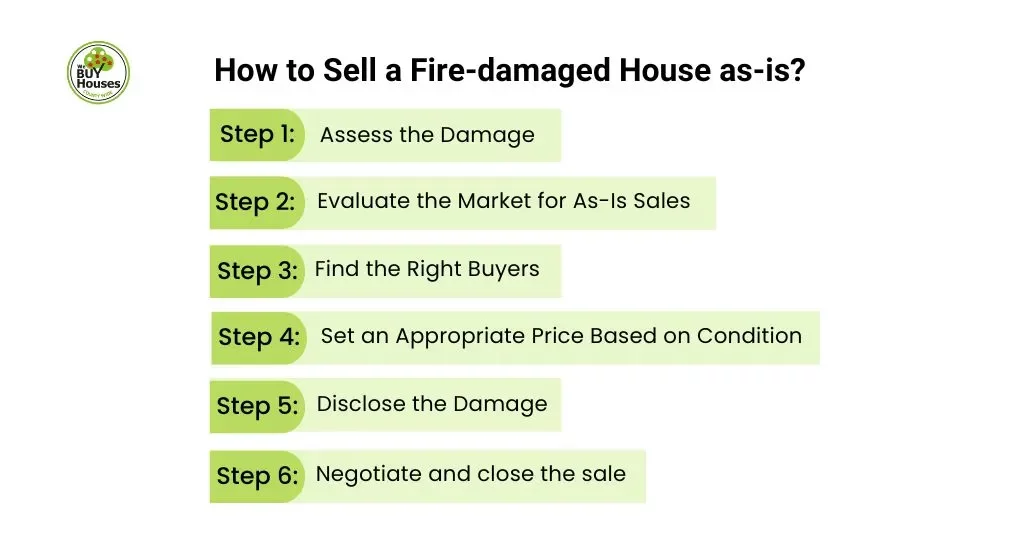
Step 1: Assess the Damage
Start by carefully evaluating the fire damage to your house, checking for structural issues, smoke damage, and potential health hazards such as mold. Document everything with photos and notes, as this will help you set a fair price and disclose the damage to potential buyers. Also, consider hiring a professional restoration company or a structural engineer to obtain an objective assessment and estimate of repair costs.
Step 2: Evaluate the Market for As-Is Sales
Next, research the market to determine the selling prices of fire-damaged homes in your area. Look for similar properties sold as-is, noting their asking prices and time on the market. If it is a buyer’s market, you may need to be more flexible on your price. Additionally, to sell your house as-is, consider consulting with a real estate agent specializing in distressed properties for guidance. You can also calculate the as-is value by subtracting the repair cost from the pre-fire value.
Formula To Calculate the As-Is Value of a Fire-Damaged House:
Preliminary As-Is Value = (Pre-Fire Value) – (Total Repair Cost)
For example, suppose your home was worth $300,000 before the fire, and the estimated total repair cost is $90,000.
Preliminary As-Is Value = $300,000 – $90,000 = $210,000
In this case, pricing the home around $210,000 reflects its as-is condition and repair needs, making it more attractive to investors or cash buyers.
Step 3: Find the Right Buyers
When selling a fire-damaged house as-is, your target audience shifts from traditional families to professional real estate investors, house flippers, and land developers. Because traditional buyers often cannot secure mortgages for damaged homes, you should focus on cash buyers or hard money buyers who are comfortable with structural or cosmetic issues. To reach them, list the property on investor-focused platforms, attend local real estate investor meetings, work with agents experienced in distressed sales, or market directly through auctions and real estate networks.
Step 4: Set an Appropriate Price Based on Condition
Pricing is key when selling a fire-damaged home. If you price it too high, you might scare off potential buyers, but pricing it too low could mean you lose out on the home’s value. Therefore, start with the pre-fire market value and adjust it based on the damage. Include repair estimates, insurance payouts, and comparable property sales in your calculations.
Step 5: Disclose the Damage
Full disclosure is crucial, both legally and ethically, as it protects both parties. Being transparent about fire damage and any repairs ensures compliance with legal requirements. Failure to disclose can lead to lawsuits or canceled sales. Providing receipts or contractor reports for repairs demonstrates the property’s true condition. Honesty fosters trust with buyers, helping avoid legal issues and leading to smoother negotiations for a successful sale.
Step 6: Negotiate and close the sale
Be ready for buyers to try to lower the price because of the fire-damaged condition of the house. If you are working with a real estate agent, they can assist with handling negotiations. Once a price is agreed upon, ensure all paperwork is in order, including the sale agreement and disclosure documents. This may also include handling legal or title transfer issues, which can be handled by a lawyer or a real estate professional.
How to Sell a Fire-damaged House After Repair?
You can sell a fire-damaged house after repairs by obtaining repair estimates, hiring specialized fire damage restoration contractors, disclosing the fire damage to buyers, and effectively marketing the restored property. These steps will help you successfully sell your fire-damaged house after repairs while maintaining transparency with buyers. While selling a house that needs repairs typically involves less effort and quicker sales, selling a house after repairs allows for a higher price, reflecting the value of the restoration.
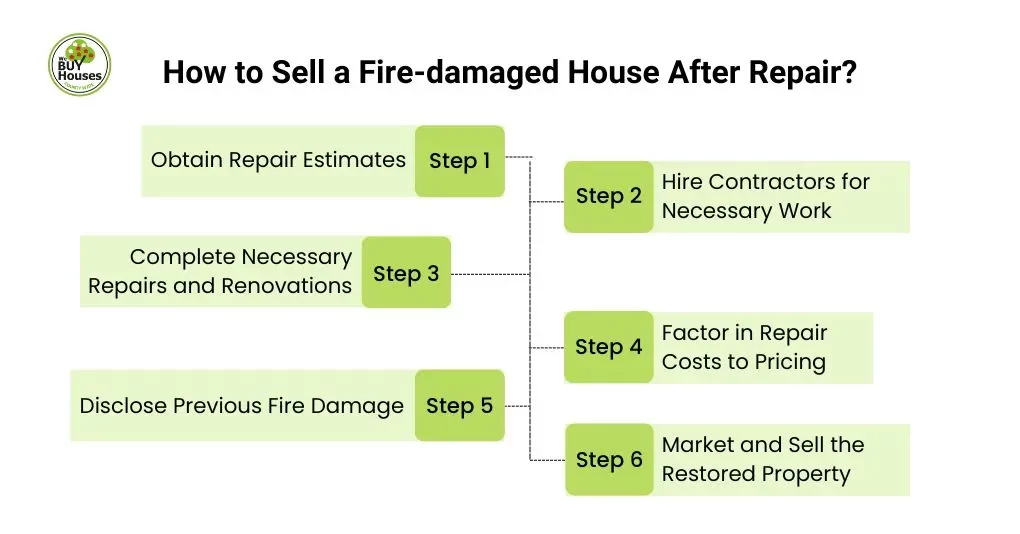
Step 1: Obtain Repair Estimates
Begin by getting detailed estimates from at least three licensed contractors to understand the full financial scope of the restoration. Request itemized breakdowns for labor, materials, and specialized services like smoke remediation. Ensure the quotes account for hidden issues, such as heat-damaged wiring or structural foundation cracks. These figures help determine whether the project is financially viable or whether repair costs will exceed the home’s projected market value.
Step 2: Hire Contractors for Necessary Work
Hire a team with specific expertise in fire and smoke restoration to ensure the home meets safety standards. Before signing a contractor, verify their licenses, insurance, and professional references for similar projects. Establish a clear project timeline and a milestone-based payment schedule to avoid budget overruns. Maintaining regular communication with your contractor is essential to keep the restoration on schedule and ensure the work meets your quality expectations.
Step 3: Complete Necessary Repairs and Renovations
Focus first on structural integrity by repairing the roof, support beams, and wall studs. Once the home is safe, replace compromised HVAC, plumbing, and electrical systems to meet modern buyer expectations. Finish the process with cosmetic upgrades, such as new flooring, cabinetry, and paint, to give the home a fresh, move-in-ready feel. Always verify that every phase of the work complies with local building codes and passes final safety inspections.
Step 4: Factor in Repair Costs to Pricing
Set a competitive asking price by adding the total restoration costs to your pre-fire equity or purchase price. Research comps for recently renovated homes in your area to see what buyers are currently paying for similar properties. Be realistic about your market, as you may need to price the home slightly below the price of non-damaged properties to attract buyers. A balanced price ensures you recoup your investment while remaining attractive to traditional home shoppers.
Step 5: Disclose Previous Fire Damage
Legally, you must disclose the history of fire damage to potential buyers, even if the repairs are perfect. Provide full transparency regarding the fire’s extent and the specific work done to restore the property. Share documentation such as building permits, contractor receipts, and inspection reports to build buyer trust and demonstrate the home’s safety. This upfront honesty protects you from future legal disputes and helps ensure a smoother closing process.
Step 6: Market and Sell the Restored Property
Highlight the home’s like-new status using professional photography of the renovated interiors. In your listing, emphasize new systems like the roof, wiring, and HVAC to turn the property’s history into a selling point for safety and reliability. Work with a real estate agent experienced in selling restored homes to help navigate buyer concerns. A proactive marketing strategy focusing on the quality of the restoration will help you secure the best possible sale price for your fire-damaged house.
How to Sell a Fire-Damaged House for Land Value?
To sell a fire-damaged house for land value, determine the land’s value, assess demolition needs, target the right buyers, price accordingly, disclose the damage, and close transparently. This approach shifts the focus from the damaged structure to the land’s development potential, making it especially appealing to investors and developers seeking redevelopment opportunities.
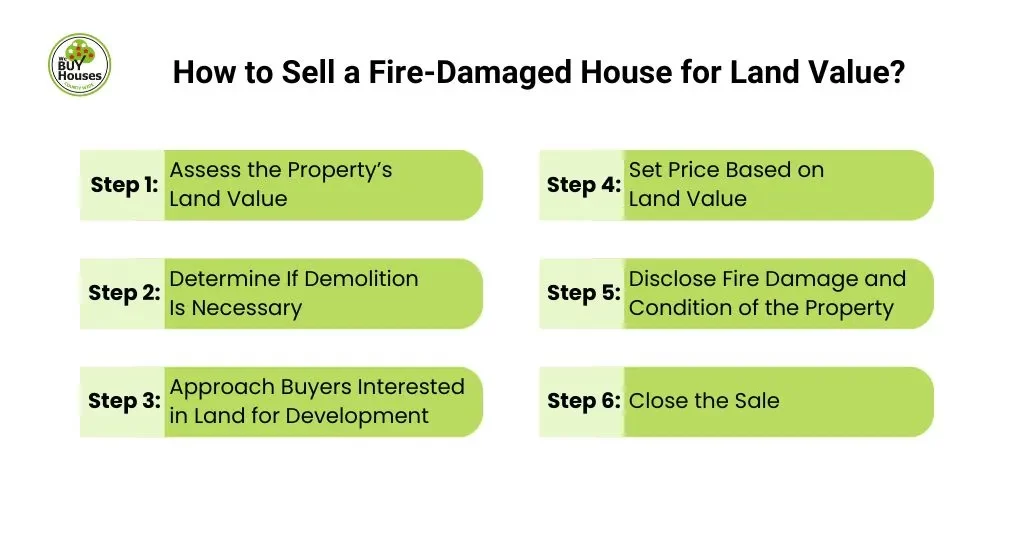
Step 1: Assess the Property’s Land Value
The first step is determining the land value by evaluating factors such as location, lot size, and zoning laws. Assess its true value by finding the After Repair Value (ARV) of similar homes, subtracting estimated rebuild/cleanup costs to find the land value, and disclosing all damage honestly. For this, get a professional land appraisal to find the true market value and research recent sales of similar lots in your area.
Step 2: Determine If Demolition Is Necessary
Deciding whether to demolish the fire-damaged structure is a key choice that affects the land’s marketability. If the house is structurally compromised, clearing the lot may make the property much more attractive to buyers who want a build-ready site. Consult with demolition specialists to get cost estimates and weigh these against the potential increase in sale price.
Step 3: Approach Buyers Interested in Land for Development
Target your marketing to real estate developers, property investors, and builders specializing in new construction. You can reach these buyers by listing the property on specialized land platforms, attending auctions, or contacting local developers directly. Be prepared to highlight the land’s potential, such as its proximity to amenities or specific zoning advantages that enable high-density development.
Step 4: Set Price Based on Land Value
Pricing should be based on a professional appraisal and recent comps of vacant lots, rather than the value of the damaged home. It is important to balance your price to remain competitive while ensuring a fair return on the property’s actual worth. Consider any additional value the property offers, such as unique zoning or future development opportunities that could make it a premium investment.
Step 5: Disclose Fire Damage and Condition of the Property
Full disclosure of the fire damage and the property’s current state is both a legal requirement and a way to build trust with potential buyers. You must provide clear details about the extent of the fire and any existing structural or environmental issues, even if you expect the buyer to demolish the building. Providing inspection reports or contractor evaluations in writing protects you from future legal claims.
Step 6: Close the Sale
The final step involves negotiating terms, signing the sales contract, and officially transferring ownership to the buyer. This process often includes a title search and final property inspections to ensure the land is clear of any legal or environmental liens. Ensure all necessary paperwork, including the deed and required permits, is organized and ready for the transaction. It is highly recommended to work with a real estate attorney or agent to manage these details.
How to Price a Fire-Damaged House?
To price a fire-damaged house, first determine its pre-fire market value, then estimate total repair costs, consider the insurance payout, assess the damage, and evaluate overall buyer demand. A well-calculated price reflects the home’s condition while balancing repair costs and market demand.
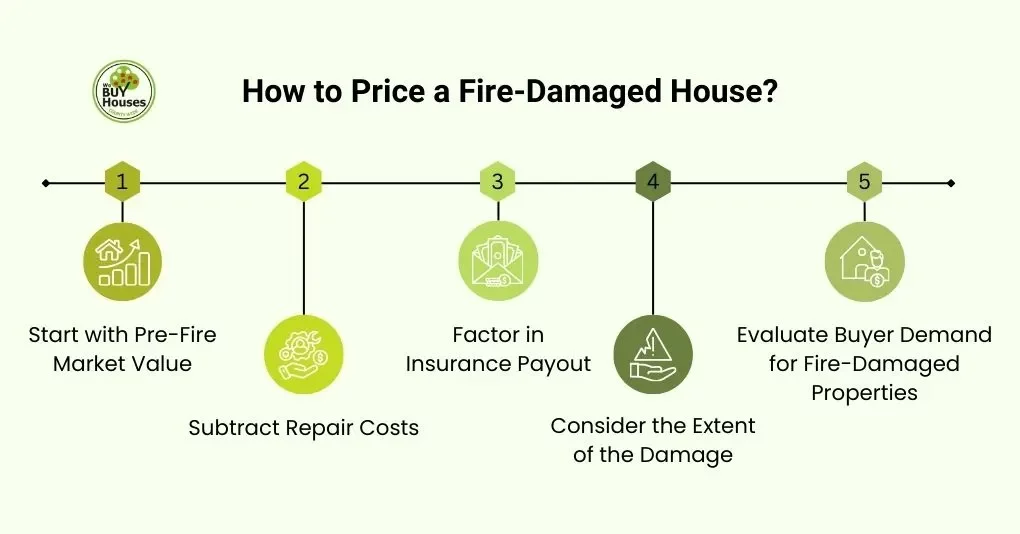
- Start with Pre-Fire Market Value
Begin pricing a fire-damaged home by assessing its pre-fire market value, which represents what the house would have sold for if it had not been damaged by fire. Use comparable sales (comps) in the same neighborhood, professional appraisals, or online valuation tools to determine an initial price range.
- Subtract Repair Costs
Once you have determined the pre-fire value, subtract the repair costs to arrive at a realistic price. Repair estimates should cover both structural repairs (like roofing and plumbing) and cosmetic fixes (such as painting or flooring). For this, you can get detailed estimates from fire restoration companies for all necessary cleanup, structural repairs, and finish replacements.
- Factor in Insurance Payout
Depending on the insurance policy, whether it is an actual cash value or replacement cost, the payout can either fund repairs to increase the property’s market value or offset a lower as-is sale price. If the seller repairs the property, the insurance payout can reduce their financial burden, potentially allowing them to ask a higher price. Sellers need to disclose the insurance payout amount to buyers to disclose the total costs of selling a house.
- Consider the Extent of the Damage
The level of fire damage is a significant factor in determining the price, as homes with minor cosmetic damage may be priced higher since repairs are less costly. On the other hand house with extensive structural damage will see a larger price reduction. Evaluate whether the damage is cosmetic (e.g., smoke stains) or structural (e.g., damaged foundations), as this will impact both the repair costs and the potential buyer pool.
- Evaluate Buyer Demand for Fire-Damaged Properties
Understanding local buyer demand is crucial when setting the price. If the market is favorable, fire-damaged homes may still attract buyers, especially investors or those using renovation loans. Cash buyers, real estate investors, and homebuyers with renovation loans (such as FHA 203(k)) are typically most interested in fire-damaged homes.
Who Buys Fire-Damaged Homes?
Cash home buyers, real estate investors, and house flippers are the most common buyers of fire-damaged homes, as they look for opportunities to buy low, renovate, and resell for profit. Other options include specialized agents who connect sellers with investors, or properties sold at auction, reaching a broader but typically smaller pool of buyers.
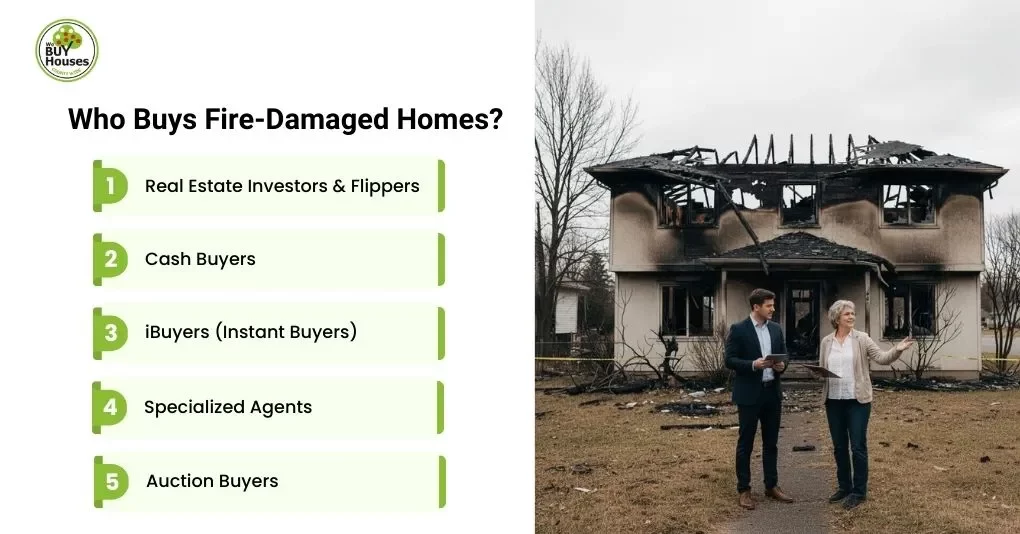
5 Types of Buyers Who Buy Fire-Damaged Homes:
- Real Estate Investors & Flippers: These buyers purchase fire-damaged homes with the intention of renovating them to increase their market value. Selling your house to investors means a profitable return, as they specialize in buying distressed properties like fire-damaged homes.
- Cash Buyers: Cash buyers, whether individuals or investment companies, are attracted to fire-damaged properties because they can pay in full without relying on traditional financing. This enables a quicker and more straightforward transaction. Additionally, cash buyers purchase fire-damaged homes as-is to minimize the need for repairs.
- iBuyers (Instant Buyers): Instant buyers use technology to quickly assess a fire-damaged home’s value and factor in the cost of repairs. They offer a fast, hassle-free sale, making them ideal for sellers who prioritize convenience and speed over the highest possible price.
- Specialized Agents: Specialized agents work with sellers of distressed properties, connecting them with buyers or investors seeking fire-damaged homes. These agents facilitate targeted sales, ensuring sellers connect with the right buyers for smoother transactions.
- Auction Buyers: Fire-damaged homes are sometimes sold at auction, where buyers understand that repairs are needed. These buyers often seek properties at a significant discount for redevelopment, either to use the land or the structure.
What Are the Legal Considerations and Disclosures When Selling a Fire-Damaged House?
When selling a fire-damaged house, sellers are legally required in most jurisdictions to fully disclose the fire’s occurrence, cause, extent of damage, repairs made, and any remaining issues, such as smoke odor or structural concerns. Providing thorough documentation, including repair records, permits, insurance claims, and photos, helps ensure transparency and build buyer trust, while failure to disclose material facts can result in legal disputes.
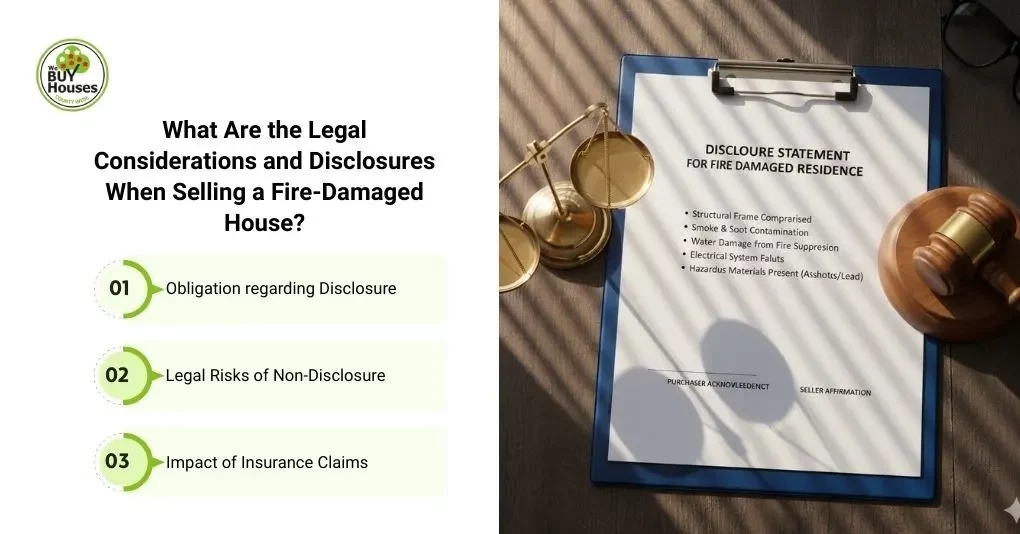
- Obligation regarding Disclosure
Sellers are legally obligated to disclose all known fire damage to potential buyers when selling a fire-damaged home. Under the Uniform Residential Disclosure Act (URDA) and specific state laws, such as California Civil Code 1102, sellers must disclose material defects, including visible and hidden fire damage, through a written Real Estate Transfer Disclosure Statement (TDS). This includes structural issues, cosmetic damage, and hidden damage such as water-impacted electrical systems. Failing to disclose fire damage can lead to fraud lawsuits. To ensure compliance, consult a professional to ensure you have all the documents needed to sell your house and remain compliant with local laws.
- Legal Risks of Non-Disclosure
Failing to disclose fire damage exposes sellers to significant legal risks, including fraud charges. In California, for example, failure to disclose fire damage can lead to accusations of fraud under California Civil Code Section 1572, which defines fraud as the intentional concealment of material facts. Buyers discovering undisclosed fire damage after closing can cancel the sale, return the property, and pursue legal action for misrepresentation under California Civil Code Section 1102.6. Sellers may also face price reductions or lawsuits for unexpected repair costs. Full disclosure is the best protection against these risks, and sellers should consult legal professionals to ensure compliance with disclosure laws.
- Impact of Insurance Claims
Insurance claims play a significant role in the sale of a fire-damaged home, especially if the homeowner has received a payout for repairs. Sellers must disclose any insurance claims related to the fire, including the payout amount and whether repairs were covered. If repairs were made with insurance funds, documentation must be provided to verify the work. If a cash settlement is provided without repairs, buyers may be hesitant and need to assess the property’s true condition. In cases of severe fire damage, insurance companies may opt for an insurance buyback, offering an alternative for the seller if the property is beyond repair. Sellers must fully disclose all insurance-related information to avoid legal complications or misunderstandings during the sale.
Making the Right Choice for Selling Your Fire-Damaged House
Selling a fire-damaged house is a decision that requires careful consideration of your finances, the property’s condition, and your long-term goals. For some homeowners, the emotional cost of restoration is too high, while others may view the fire as an opportunity to rebuild and maximize profit. Homeowners can either sell as-is, repair before listing, or sell for land value. The right choice depends on whether you prioritize a quick sale or maximizing the final price.
To make an informed decision, consider these key factors:
- Financial Resources: Do you have the cash or sufficient insurance payout to fund restoration?
- Damage Severity: Structural damage may make the house a teardown, while cosmetic or smoke damage can be repaired to restore market value.
- Timeline Goals: If you need to relocate quickly, an as-is cash sale can close in days, whereas repairs can take months.
- Market Demand: Is your property in a high-demand area where developers would pay a premium for land?
Ultimately, the best way to sell a fire-damaged house depends on your priorities and circumstances. Selling as-is offers speed and convenience, repairs may deliver a higher return but require time and investment, and selling for land value can be ideal when the structure is beyond repair but the location remains desirable. Consulting with a real estate professional or financial advisor can help you compare net proceeds, timelines, and risks to choose the option that best aligns with your goals.