
To sell a house, you need to prepare the home, set a competitive price, market the property, and review offers from potential buyers. After accepting an offer, enter escrow, complete any required inspections, and finalize the paperwork. Finally, close the sale by transferring home ownership to the buyer and receiving the proceeds, minus fees and costs. Following these steps ensures a smooth and successful home sale.
You can sell a house through a real estate agent, For Sale By Owner (FSBO), or to an investor. Using a real estate agent gives you professional help and a broader market, selling FSBO allows you to save on commission, and selling to an investor can result in a quicker sale. The right choice depends on your situation, whether you are selling a home in probate, an inherited house, or during a divorce.
Before listing the house, prepare it by cleaning, decluttering, and making necessary repairs. If you are selling a damaged house or a home with tenants, adjust your approach or pricing accordingly. Setting a competitive price using a Comparative Market Analysis (CMA) helps you assess your home’s value based on similar properties. Be aware of all selling costs, including closing costs, agent commissions, and potential repairs, especially for homes in trust or with legal complexities.

How Does Selling a House Work From Start to Finish?
Selling a house involves preparing the home, setting the price, marketing it, reviewing offers, and closing the sale. Following a structured process and being prepared for each stage helps avoid potential pitfalls and ensures a successful transaction. From repairs and staging to pricing and marketing, each step is crucial for a smooth sale, ultimately leading to a successful closing and the transfer of ownership to the buyer.

10 necessary steps for selling a house are:
- Pre-listing preparation
Preparing your home for sale is key to attracting buyers and securing the best possible sale price. Start by completing necessary repairs, cleaning, and decluttering to create a tidy, inviting space. Staging the home helps buyers visualize its potential, while improving curb appeal with simple updates like landscaping and painting the front door creates a positive first impression. These steps will enhance your home’s appeal and attract more interested buyers.
- Learn the market and price the home
Understanding the market is essential for setting a competitive price and selling your home successfully. Start with a Comparative Market Analysis (CMA) to compare your home with similar properties nearby. Consider market conditions, like whether it is a buyer’s or seller’s market, as this can impact your pricing strategy. Working with a real estate agent or appraiser helps ensure your home is priced competitively. Setting the right price from the start helps attract serious buyers and facilitates a quicker sale.
- Finding the right selling method and pricing
Choosing the right selling method, whether through a real estate agent, For Sale By Owner (FSBO), investor, or auction, and setting the correct price are essential for a successful home sale. Each method affects the level of control, speed, and cost involved in the sale. Pricing should reflect market conditions, your home’s condition, and your goals to ensure you attract serious house buyers and achieve the best return.
- Marketing and showings
To attract serious home buyers and ensure a fast sale, implement effective marketing strategies such as professional photography, virtual tours, and staging to highlight your home’s best features. List your property on the MLS, and promote it through social media, real estate websites, and email campaigns for maximum exposure. Hosting open houses increases foot traffic, while private showings provide a personalized experience for interested buyers. A comprehensive approach to marketing significantly enhances your home’s appeal.
- Receive and review offers
Receiving and reviewing offers for your house includes evaluating the offer price, buyer contingencies, and the closing timeline. It is important to assess the house buyer’s ability to meet these conditions and their financial readiness. Reviewing these factors helps you identify the strongest offers, ensuring you choose one that aligns with your goals and leads to a smoother, faster sale. This step ultimately impacts how quickly you can move forward in the selling process.
- Accept an offer and enter escrow
Once you have selected an offer for your house, accepting it and entering escrow formalizes the agreement and sets the process in motion. Escrow acts as a neutral third party that holds the buyer’s deposit and ensures all conditions are met. This phase allows the home buyer to complete inspections, secure financing, and address any contingencies. Escrow protects both parties by ensuring the transaction moves forward smoothly and provides time for any necessary steps before closing the sale.
- Buyer inspections and appraisal
Next, the home buyer will typically schedule an inspection and appraisal to assess the property’s condition and value. The home inspection ensures there are no hidden issues that could affect the sale, while the appraisal verifies the home’s value for the lender. If any problems arise during these processes, the buyer may request repairs or a price adjustment. This step helps ensure the sale price is justified and prevents surprises before closing.
- Clear contingencies and finalize paperwork
Once all conditions in the buyer’s offer are met, it is time to clear any contingencies, such as repairs, financing, or inspection results. Afterward, both parties complete the necessary paperwork, including the sales contract, title transfer, and disclosures. This step ensures all requirements are met and sets the stage for a smooth closing, avoiding any last-minute delays or issues.
- Close the sale
Closing the sale is the final and most crucial step in transferring ownership of the house to the buyer. At this point, all documents are signed, and funds are exchanged. You will receive the proceeds from the sale, minus closing costs, agent fees, and any remaining mortgage balance. Once the paperwork is complete, the transaction is finalized, and the property officially changes ownership, marking the successful completion of the sale.
- Moving out and handover
Once the sale is closed, moving out and handing over the house keys is the final step in transferring ownership to the new buyer. Make sure the property is cleaned and free of personal belongings, leaving it in the agreed-upon condition. This step officially transfers ownership to the new buyers, ensuring a smooth transition. By leaving the home in good shape, you create a positive impression and help the new owners settle in without issues.
What Are the Different Ways to Sell a House?
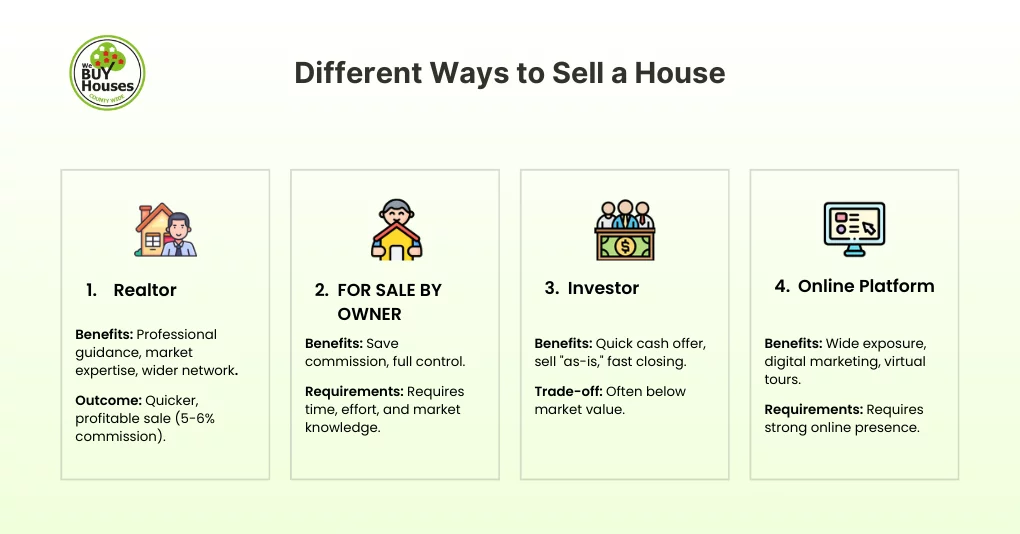
4 house selling options are through a real estate agent, For Sale By Owner (FSBO), selling to a real estate investor, or using online platforms. Each method has its own benefits, whether you prefer professional guidance, want to save on commission, need a quick sale, or prefer the convenience of digital marketing. The right choice depends on your goals, priorities, timeline, and the condition of your property.
How Do You Sell a House With a Realtor?
Selling a house with a real estate agent involves preparing the house, hiring a real estate agent, setting the right price, marketing the home, negotiating offers, and handling the paperwork. The agent will list your home on the Multiple Listing Service (MLS), provide professional photography, and conduct showings to attract buyers. They will also ensure all legal requirements are met and help you navigate the closing process. Although agents charge a commission (5-6%), their expertise often results in a quicker and more profitable sale. When comparing selling a house by owner (FSBO) to working with a realtor, real estate agents bring valuable market knowledge, negotiation skills, and a wide network, which typically leads to a more efficient sale.
How Do You Sell a House Without a Realtor?
Selling a house without a realtor involves managing the entire process yourself, from preparing the home to pricing, marketing, negotiating offers, and handling the paperwork. While you save on commission fees by not hiring a real estate agent, you will be responsible for creating online listings, conducting showings, and dealing directly with buyers. Selling a house by owner (FSBO) is cost-effective, but it requires time, effort, and a solid understanding of the market and legal requirements to ensure a smooth transaction. Without a realtor’s expertise, negotiations can be challenging, and legal aspects of the sale may require more attention to detail.
How Do You Sell a House to an Investor?
To sell a house to an investor, find a reliable buyer, receive a cash offer, negotiate the price, and finalize the sale, often without needing repairs, inspections, or appraisals. Investors typically buy houses as-is, allowing for a fast closing, often within a week. The process is more streamlined and faster than traditional selling, though investors may offer less than market value. Selling a house to an investor is ideal for sellers needing a quick sale or those with properties that require significant repairs.
How Do You Sell a House Online?
To sell a house online, list your property on real estate platforms, upload high-quality photos, write a clear description, and set a competitive price. Once your listing is live on real estate platforms like Zillow, Redfin, or Realtor, you will handle inquiries, schedule virtual tours, and negotiate offers. Some platforms even allow direct sales to buyers or connect you with investors, making the process quicker. Selling online offers wide exposure but requires strong marketing and attention to detail.
How Should You Prepare a House for Sale?
Preparing a house for sale involves cleaning, decluttering, making necessary repairs, and staging to create an inviting and well-maintained appearance. This process includes addressing any visible issues like leaky faucets, cracked tiles, or worn-out paint, and improving curb appeal by trimming the lawn, planting flowers, and painting the front door to make a strong first impression. Additionally, staging the home to highlight its best features helps potential buyers envision themselves living there and increases its appeal.

What Should You Fix Before Selling a House?
Before selling a house, focus on fixing minor repairs such as scratched floors, cracked tiles, chipped paint, and leaky roofs and faucets. Also, ensure that appliances are in good working order, and address any plumbing or electrical issues. These simple fixes make your home more appealing to buyers, helping to prevent them from negotiating a lower price due to perceived issues or deferred maintenance.
How Do You Prepare a House to Sell Without Repairs?
To prepare a house sale without making repairs, focus on cleaning, decluttering, and staging to make the home look well-maintained and inviting. Enhance curb appeal with simple updates like trimming the lawn, adding plants, and painting the front door. Be transparent with buyers about the home’s condition and adjust the price to reflect the “as-is” sale. While this approach allows for a quicker sale, it typically results in a lower offer from buyers. If you are selling a house that needs rework, it is crucial to manage expectations and price it accordingly to reflect the potential for repairs and updates.
How Does Selling a House As-Is Work?
Selling a house as-is means listing the property without making any repairs or improvements. Buyers agree to purchase the home in its current condition, including any structural issues, cosmetic damage, or outdated features. The sale price is typically lower (8% to 20% below market value) to reflect the home’s condition. Selling a house as-is is beneficial for those looking for a quick sale, as it eliminates the need for repairs or negotiations over issues, but it often results in a lower offer from buyers. Buyers assume responsibility for any repairs after the purchase.
How Should You Price a House to Sell?
To price a house effectively, perform a Comparative Market Analysis (CMA), consider the market value, account for the home’s condition and features, and get a professional valuation. Setting the right price is essential to attract buyers, generate interest, and sell the home quickly, while overpricing or underpricing can result in missed opportunities or a longer time on the real estate market.
How Do You Determine the Right Listing Price?
To determine the right listing price for your house, you need to evaluate Comparative Market Analysis (CMA), market conditions, and the condition of your home. By analyzing recent sales of similar properties in your area, considering current trends in the housing market, and assessing your home’s features and condition, you can establish a price that’s competitive yet reflects the home’s true value.
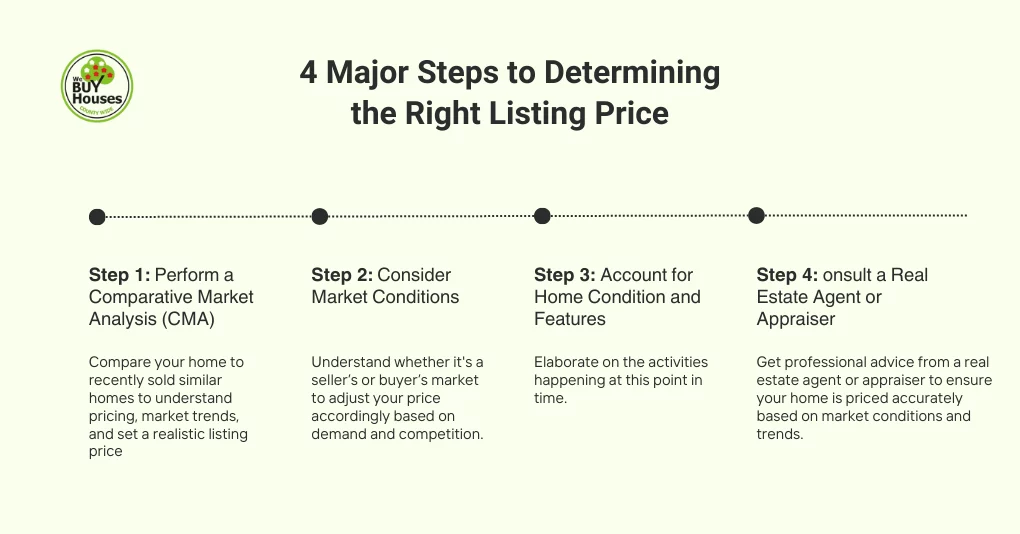
4 major steps for determining the right listing price for your house are:
- Step 1: Perform a Comparative Market Analysis (CMA)
Conducting a Comparative Market Analysis (CMA) involves comparing your home to recently sold homes in your area that are similar in size, condition, and features. The CMA provides valuable insights into sale prices, days on market, and price trends, helping you set a competitive and realistic listing price based on actual data.
- Step 2: Consider Market Conditions
Understanding market conditions helps you price your home effectively, as they determine buyer behavior and competition. In a seller’s market, where demand is high, you can price your home higher, knowing buyers are competing. Whereas, in a buyer’s market, with more homes available than buyers, you may need to price more competitively to attract interest and offers.
- Step 3: Account for Home Condition and Features
The condition of your home and its unique features help determine the right listing price. A home with upgrades like modern appliances or fresh paint can be priced higher than one in need of repairs. Additionally, factors like square footage, number of bedrooms, location, and special features like a pool should be factored in to ensure your home is priced accurately for its market value.
- Step 4: Consult a Real Estate Agent or Appraiser
Consulting a real estate agent or appraiser is essential to ensure your home is priced accurately based on current market conditions and local trends. Agents provide a comparative market analysis (CMA), while appraisers offer an unbiased evaluation of your home’s value. Their expertise helps you avoid pricing mistakes, ensuring your home is competitively priced to attract buyers and sell quickly.
What Happens if a House Is Overpriced or Underpriced?
If a house is overpriced, it sits on the market for longer, causing buyer hesitation and leading to price reductions. As the listing ages, buyers might assume something is wrong with the property, leading to fewer showings and lower offers. On the other hand, if a house is underpriced, it may attract a quick offer but could result in leaving money on the table, as the seller may not receive the full market value for the property. Setting the right price ensures the home attracts serious buyers and maximizes the sale price.
How Does Pricing Change When Selling for Cash?
When selling for cash, the price is typically lower, often ranging from 10-20% below market value. Cash buyers, such as investors, are willing to purchase a home as-is, which eliminates the need for repairs, inspections, and long waiting periods for financing. In exchange for the convenience and a quicker closing, usually within 7-14 days, sellers often accept a discounted price. While this results in a lower sale price, the trade-off is a faster, more straightforward transaction without contingencies.
How Much Does It Cost to Sell a House?
Selling a house typically costs between 5-10% of the sale price, including real estate agent commissions, closing costs, and other expenses. These costs include the real estate agent commission (typically 5-6% of the sale price), closing costs (which can range from 2-5%), and any repairs and staging costs to prepare the home for sale. Additional expenses may include mortgage payoff, transfer taxes, and title insurance, which vary depending on the location and condition of the property. When calculating the cost to sell a house, it is important to factor in these various fees, as they can significantly impact the net proceeds from the sale.
What Fees Do You Pay When Selling a House?
When selling a house, you typically pay real estate agent commissions (around 5-6% of the sale price), closing costs (usually 2-5%), and costs for repairs and staging to prepare the home for sale. You also need to pay off the remaining mortgage balance, cover transfer taxes (ranging from 0.1%-2%), and purchase title insurance, costing around 0.5% to 1% of the sale price.

- Real estate agent commission
The real estate agent commission typically ranges from 5-6% of the sale price, which is split between the buyer’s and seller’s agents. This fee covers the agent’s services, including marketing, negotiations, showings, and guiding the transaction to completion. While this fee can be negotiated, it is a significant cost to consider when selling through an agent.
- Closing costs
Closing costs typically range from 2-5% of the sale price and can include fees for title transfer, escrow, and attorney services (if applicable). Recording fees, notary fees, and final utility bills are also part of the closing costs. These costs vary based on location and property value, and they are typically paid at the closing of the sale.
- Repairs and staging costs
Repairs and staging costs vary based on the home’s condition. Simple repairs like fixing leaks or painting can cost a few hundred dollars, while more extensive repairs can run into the thousands. Staging typically costs between $500-$5,000, depending on the services required. These costs can help enhance the home’s appeal, potentially leading to a faster sale and higher offers.
- Mortgage Payoff
The mortgage payoff is the remaining balance on your loan that must be paid off when selling the house. This amount includes the principal balance, plus any interest due. The payoff amount can vary depending on how much of the mortgage you have already paid down and whether there are any prepayment penalties. It is typically paid at the closing, reducing your proceeds from the sale.
- Transfer Taxes and Title Insurance
When selling a house, you may need to cover transfer taxes, which typically range from 0.1%-2% of the sale price. Additionally, title insurance typically costs around 0.5% to 1% of the sale price. These costs are usually paid at closing and are important to consider when calculating the total expenses of selling your home.
How Much Does It Cost to Sell a House by Owner?
Selling a house by owner (FSBO) typically costs a few thousand dollars for marketing, legal fees, and administrative expenses. Because FSBO allows homeowners to avoid the seller’s agent commission, they can save tens of thousands of dollars. While you save on commission, you will need to manage the sale process on your own, including negotiations and paperwork.
However, homeowners often lose between 8% and 20% of their home’s market value when selling on their own, as buyers may perceive FSBO homes as higher risk or less desirable. This potential loss while selling a house as-is is an important factor to consider when deciding whether to sell without repairs.
How Much Do Realtors Charge to Sell a House?
Realtors typically charge a commission of 5-6% of the house sale price, which is usually split between the seller’s and buyer’s agents. This fee covers the agent’s services, including marketing, listing the property, conducting showings, negotiating offers, and handling all the paperwork. While the realtor’s commission can be negotiated, it is an important cost to factor in when considering whether to work with a real estate agent or sell by owner (FSBO).
What Taxes Do You Pay When Selling a House?
When selling a house, you may be subject to capital gains tax, state or local taxes, and other fees. These taxes depend on your home’s sale price, how long you have owned the property, and whether the property has appreciated. Understanding these taxes and potential exemptions can help maximize your profit and minimize costs from the house sale.

Capital Gains Tax
Capital gains tax is the tax on the profit you make from selling a property. If the sale price exceeds the amount you paid for the home (plus any improvements), the profit is subject to this tax.
If you sell your home for $300,000 and bought it for $200,000, the $100,000 profit may be subject to capital gains tax. The rate depends on how long you have owned the property. Short-term capital gains (for properties held 1 year or less) are taxed at regular income tax rates, ranging from 10% to 37% depending on your income bracket. In contrast, long-term capital gains (for properties held longer than 1 year) are taxed at a preferential rate of 0%, 15%, or 20%.
How Do You Avoid or Reduce Capital Gains Tax When Selling a House?
To reduce or avoid capital gains tax, use the primary residence exclusion, complete a 1031 like-kind exchange, or utilize tax-loss harvesting. Homeowners can apply deductions for home improvements and selling costs to lower taxable gains. Using these strategies not only helps avoid or reduce capital gains tax on house sale but also ensures you keep more of your sale proceeds by reducing the overall tax burden and maximizing your financial return.
Primary Residence Exemption
The Primary Residence Exemption allows homeowners to exclude up to $250,000 in capital gains ($500,000 for married couples filing jointly) when selling their primary home. To qualify, the property must have been your primary residence for at least 2 out of the last 5 years. This exemption applies to gains from the sale of the home, meaning that if the property appreciated over time, homeowners can exclude a significant portion of those gains from taxation. However, if the property was not your primary residence for the required period, or if you have already used the exemption in the last two years, you may not qualify.
State or Local Taxes
State or local taxes can significantly affect the amount of money you keep after selling your home, as many states impose their own capital gains tax on top of federal taxes. The rates vary widely, with some states taxing capital gains as ordinary income while others may offer exemptions or lower rates. For example, California applies a tax rate between 1% and 13.3% on capital gains, treating them as regular income based on the seller’s income bracket. Understanding your state’s tax laws is crucial, as it can greatly impact your final proceeds from the sale.
How Long Does It Take to Sell a House?
Selling a house typically takes anywhere from 30 to 90 days. This timeline can vary based on market conditions, property price, location, and buyer demand. Homes in competitive markets with high demand and attractive pricing may sell in less time, while properties in slower markets or higher price ranges can take longer. The condition of the property, whether it is move-in ready or needs repairs, also plays a significant role in how quickly it sells.
How Long Does It Usually Take to Sell a House in a Normal Market?
In a normal market, it usually takes 47 to 62 days to sell a house. However, according to the National Association of REALTORS (NAR), the average time to sell a house takes 35 days. This timeline can vary based on factors such as pricing, market demand, and the condition of the property. Homes that are priced competitively and in good condition tend to sell faster, while those that are overpriced or need repairs may take longer to attract buyers.
What Factors Affect How Fast a House Sells?
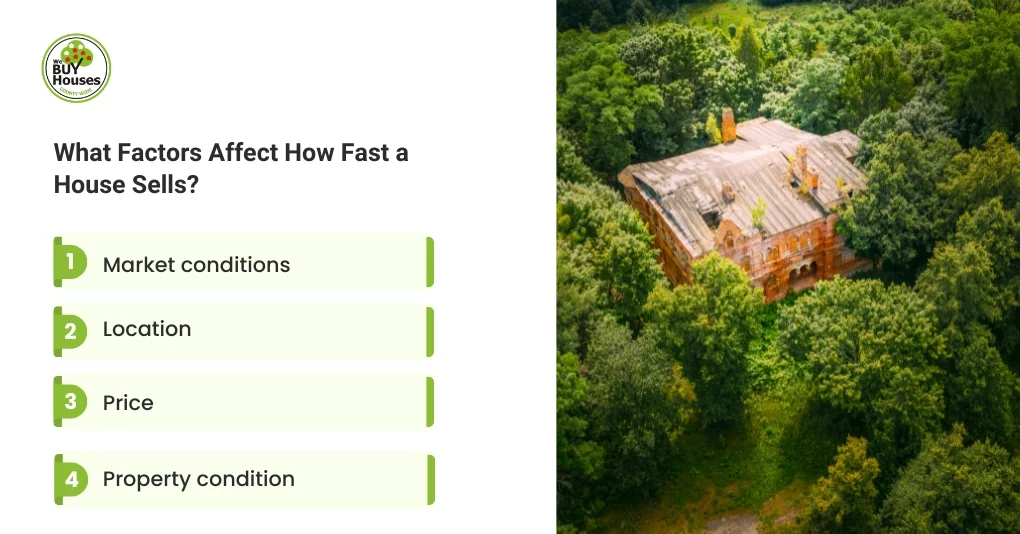
Several factors affect how fast a house sells, including market conditions, location, price, and property condition. Homes in a seller’s market with high demand tend to sell faster, while properties in a buyer’s market may take longer. Proper pricing and a well-maintained property can speed up the process, whereas overpriced or poorly maintained homes typically sit on the market longer.
- Market conditions
The current market trend heavily influences the speed of a sale. In a seller’s market, where demand exceeds supply, homes typically sell quickly and often for higher prices. In a buyer’s market, with more homes available than buyers, homes may sit on the market longer and require price adjustments to gain buyer interest.
- Location
Properties in high-demand areas, such as those near good schools, shopping, or major transportation routes, generally sell faster. Homes in less popular locations may need to be priced more attractively or require additional marketing to move quickly.
- Price
Setting a fair and competitive price based on market comparisons can attract more buyers. Meanwhile, overpricing can lead to longer market times, while underpricing may result in a quick sale but at a lower return.
- Property condition
Homes that are well-maintained and move-in ready are more likely to attract buyers quickly. But homes in need of significant repairs may take longer to sell and could require price reductions to attract offers.
How Do Cash Buyers Help Sell a House Faster?
Cash buyers help sell a house faster by eliminating the need for mortgage approvals, inspections, and appraisals, leading to a quicker and simpler closing process. With cash offers, the sale can often close in 7 to 14 days, without the delays typically associated with traditional financing. Additionally, cash buyers typically purchase homes as-is, meaning sellers do not have to make repairs or upgrades, which makes the entire transaction faster and more efficient.
How Long Does Closing Take After Accepting an Offer?
After accepting an offer for your house, closing typically takes between 30 and 60 days. Various factors, such as the buyer’s financing, inspections, and contingencies, influence the closing timeline. If the buyer is financing the purchase, the process can take longer due to mortgage approval and appraisal requirements. However, if you are selling to a cash buyer, the closing process is often much faster, typically taking only 7 to 14 days since there are no financing hurdles or lengthy approval processes.
What Is the Best Time to Sell a House?
The best time to sell a house is typically during the spring and summer months, with May and June being particularly favorable for a quick sale. During these months, the market is more active, and buyers are motivated to purchase before the school year begins. Homes tend to sell faster and at better prices during this period due to increased buyer demand. However, selling in the fall or winter can also be a good option, as there are fewer homes listed, allowing yours to stand out. Ultimately, the best time to sell a house depends on your goals and local market trends, but spring and summer generally offer the highest potential for a successful sale.
What Paperwork and Legal Requirements Are Needed to Sell a House?
To sell a house, you need the sales contract, property disclosure forms, and the title deed to complete the transaction. Legal requirements vary by location but typically include providing details about the home’s condition, disclosing any known issues, and meeting local or state regulations. Ensuring all paperwork is in order helps avoid delays and ensures the sale complies with legal standards.
What Documents Are Needed to Sell a House?
Documents required to sell a house include the title deed, the sales contract, property disclosure forms, and proof of identity. If there is an existing mortgage, you will also need mortgage documents, including the payoff statement. While these documents are generally required across the board, specific paperwork may vary depending on the state. In California, the necessary documents to sell a house are mandatory disclosures (such as the TDS and Natural Hazard Disclosure), property records (e.g., property tax bills), homeowners’ association documents (if applicable), and inspection reports (if available). These documents ensure a smooth and legally compliant transaction.
What Legal Requirements Apply When Selling a House?
When selling a house, you need to apply for disclosure forms, transfer the title deed, and comply with local and state laws. Sellers must disclose any known issues with the property, such as structural defects or environmental hazards. In some cases, you may need to work with a real estate attorney or title company to ensure all legal paperwork is correctly filed and that the sale complies with all applicable regulations.
How to Sell Your House in California?
To sell your house in California, repair and stage the house, hire a real estate agent (or choose to sell FSBO), provide mandatory disclosures like the Transfer Disclosure Statement and Natural Hazard Disclosure, market the property, and review offers. You will also need to verify ownership with documents such as the Grant Deed, gather property records like tax bills, and comply with any Homeowners Association (HOA) requirements. Finally, you will complete the purchase agreement and closing documents to finalize the sale.
How Do You Sell a House in Special Situations?
Selling a house in special situations, such as probate, divorce, inheritance, or with tenants or legal issues, requires additional steps and legal documentation. These situations often involve extra paperwork, legal proceedings, and may require the assistance of professionals like lawyers or real estate specialists to navigate the complexities. Understanding the unique requirements for each scenario helps ensure a smooth and legally compliant sale.
How Do You Sell a House in Probate?
To sell a house in probate, get the court’s approval, appoint a personal representative or executor, and provide necessary documents like the death certificate and a court order authorizing the sale. The sale must follow legal procedures, including notifying heirs and paying off any outstanding debts or taxes related to the estate. Selling a house in probate can take 6-16 months and involves additional legal steps, such as notifying heirs and handling any debts owed by the estate.
How Do You Sell an Inherited House?
Selling an inherited house requires confirming legal ownership, often through a probate court order, and addressing any outstanding debts, taxes, or liens. You must provide documents like the death certificate and proof of inheritance, and if multiple heirs are involved, you will need their agreement to sell the inherited house and divide the proceeds. Once these legal steps are cleared, you can proceed with the sale, either with a real estate agent or by selling the inherited house directly.
How Do You Sell a House During Divorce or Separation?
Selling a house during divorce or separation involves agreeing on the sale, setting a plan for the home’s condition, getting an appraisal, choosing a price, and dividing the proceeds. Both parties must consent to the sale and agree on handling mortgage payments and ownership transfer. If the property is jointly owned, the court may need to approve the sale. Selling a house during a divorce can be complex, but with proper guidance, the process can move forward smoothly.
How Do You Sell a House With Tenants or Legal Issues?
Selling a house with tenants or legal issues involves addressing tenant rights and resolving any legal matters before proceeding with the sale. If tenants are in place, you must follow the lease terms and notify them properly. For legal issues, such as title disputes or outstanding liens, these must be resolved before moving forward. If you are looking to sell a house with tenants, understanding your obligations and working through these details is key to a smooth process.
How Do You Sell a Damaged or Distressed House?
Selling a damaged or distressed house involves addressing the property’s condition and determining how to market it to potential buyers. Cash buyers or investors may be interested in purchasing such properties, as they are often willing to buy homes as-is, including those with significant damage or structural issues. Sellers can also choose to make minor repairs to increase the home’s appeal or price it lower to reflect its current condition. Proper disclosure is required to ensure buyers are fully aware of the property’s issues, avoiding potential legal issues down the line.
- Fire or flood damage
Selling a house with fire or flood damage requires disclosing any structural damage or long-term issues caused by these events. Buyers need to be fully aware of the condition, and pricing should reflect the property’s state. Selling to a cash buyer or investor who specializes in damaged homes can often be the quickest option.
- Structural problems
Selling a house with structural problems involves disclosing issues such as foundation damage, roof leaks, or framing concerns. These issues can significantly affect the home’s value, so pricing should reflect the cost of necessary repairs. Some buyers may be hesitant, but cash buyers or investors often purchase such homes as-is, willing to handle repairs themselves.
- Hoarder or vacant homes
Selling a hoarder or vacant home may require extra effort to clean and declutter the property, though some buyers may prefer to purchase it in as-is condition. Cash buyers or investors are often more willing to buy such homes, even if they require extensive cleaning or repairs. Pricing should reflect the amount of work needed, and full disclosure of the home’s condition is necessary to avoid legal issues.
How To Sell a House in a Trust?
Selling a house in a trust involves the trustee confirming their legal authority to sell the property, reviewing the trust agreement, and ensuring the sale adheres to the trust’s terms. The trustee may need to provide proof of authority, obtain beneficiary approval, and, in some cases, seek court approval depending on the type of trust. The process includes preparing documents such as the trust agreement, title deed, and property disclosures. To sell a house in a trust smoothly, work with a real estate attorney who can ensure compliance with all legal requirements and guide the trustee through the sale process.