
Selling a house with tenants requires careful planning and a strong understanding of tenant rights to ensure a smooth and legal process. Tenants have rights that must be respected, including the right to stay, privacy, and quiet enjoyment, while landlords must honor existing lease agreements and provide proper notice for eviction or entry. Ignoring these rights can lead to legal disputes, tenant resistance, and complications during the sale.
When it comes to the actual sale, landlords can sell with tenants in place, wait for the lease to expire, or negotiate an early termination. Selling to investors is often an attractive option, as they tend to prefer tenant-occupied properties for steady rental income. Regardless of the approach, landlords must ensure tenant rights are respected, the security deposit is properly transferred, and tenants are notified of the new ownership. By addressing potential challenges like tenant cooperation and property conditions, landlords can navigate the sale process successfully and ensure a smooth transition for both the tenant and the new owner.
Why Understanding Tenant Rights Matters?
Understanding tenant rights is crucial when selling a tenant-occupied property, as it helps prevent costly lawsuits, ensures a smoother sale by maintaining tenant cooperation, and impacts the property’s value and appeal to potential buyers. Tenants have strong rights to stay, privacy, and quiet enjoyment, especially under fixed-term leases or strict local laws, so landlords must be diligent in respecting these rights to avoid legal complications.
Tenant Rights You Must Respect
When selling a tenant-occupied property, it is crucial to respect key tenant rights, including the right to quiet enjoyment, privacy, proper eviction notice, and the handling of security deposits. These tenant rights are crucial to maintain a smooth sale process and a positive landlord-tenant relationship. By honoring these rights, landlords avoid legal complications, ensure fairness, and foster tenant cooperation, which ultimately contributes to a successful and seamless sale.
Lease Agreement Protections
A lease agreement is a legally binding contract between a landlord (lessor) and tenant (lessee) that defines the rights and responsibilities of both parties. It offers significant tenant protections based on the contract’s terms, as well as federal, state, and local laws, such as the Fair Housing Act. These protections include the right to a habitable living space, privacy, and certain protections against eviction, such as in cases of domestic violence or military deployment.
When a house with a tenant is sold, the existing lease generally transfers to the new owner, who becomes the landlord and must honor the lease terms, including rent and duration, until the lease expires. This ensures tenants are not immediately evicted unless the lease specifies otherwise or the sale involves a foreclosure, which requires a minimum of 90 days’ notice.
Required Legal Notices
To sell a tenant-occupied property, landlords must provide several legal notices to tenants, including a formal written notice within 30 to 90 days. These notices are required by law to ensure transparency and to protect the rights of tenants during the sale process. Failure to provide the necessary legal notices can result in legal complications and delays in the sale process. Landlords must ensure they adhere to all notice requirements to avoid conflicts and ensure a smooth transaction.
Legal Notices Landlords Must Provide Tenants:
- Entry Notice: Before showing the property or conducting inspections, landlords must provide tenants with a notice of entry. This notice typically needs to be given a certain number of days in advance, depending on local laws.
- Sale Notice: Tenants must be informed about the sale of the property. Depending on the jurisdiction, landlords may need to provide written notice to tenants well in advance of the sale.
- Eviction Notice: If the landlord intends to ask the tenant to vacate before the lease expires, an eviction notice must be provided. This notice must comply with the legal grounds for eviction and the proper notice period, which varies by state or locality.
Right to Quiet Enjoyment
The right to quiet enjoyment is a fundamental tenant right that ensures tenants can live in their rental property without undue disturbance. During the sale process, landlords must respect this right by minimizing disruptions, such as constant showings or noisy inspections.
Landlords should schedule property showings or inspections at reasonable times, avoiding early morning or late-night visits unless necessary, and align with the tenant’s routine to reduce inconvenience. Moreover, landlords must avoid harassment by not demanding excessive access or showing the property without proper notice. Tenants should feel secure and comfortable in their home throughout the sale.
Handling Security Deposit
The security deposit is an important part of the landlord-tenant relationship and must be handled carefully when selling a tenant-occupied property. Landlords are legally obligated to ensure that the security deposit is transferred correctly to the new owner or refunded to the tenant.
- Deposit Transfer: If the property is sold, the security deposit must be transferred to the new owner. The landlord should inform the tenant of this transfer and provide the necessary documentation to confirm the amount being transferred.
- Final Walkthrough: Before the sale is completed, landlords should conduct a final walkthrough of the property to ensure that it is in good condition. Any damages that might affect the deposit refund should be addressed.
- Refund to Tenant: If the security deposit is not transferred, landlords must refund it to the tenant, minus any deductions for damages or unpaid rent. Failure to handle the security deposit correctly can lead to legal complications.
How to Sell a House With Tenants?
To sell a house with tenants, review the lease agreement, communicate openly with the tenants, and ensure compliance with tenant rights and state laws. You can sell the tenant-occupied property to an investor who prefers tenants in place or negotiate an early exit with the tenants if selling to an owner-occupant.
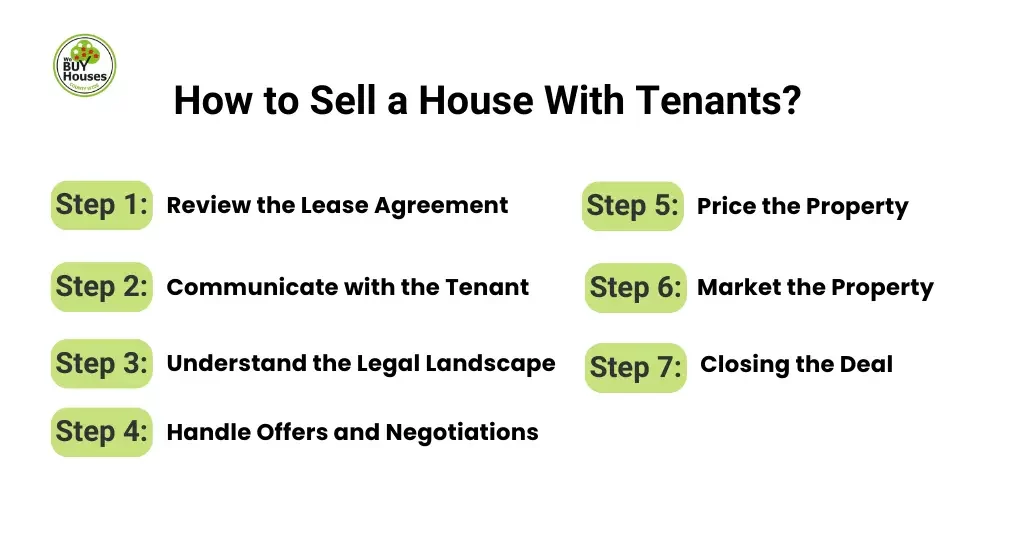
By following these 7 steps, you can legally sell a house with a tenant without any complications during the sale process.
Step 1: Review the Lease Agreement
Before placing a For Sale sign in the yard, you must perform a proper and thorough review of the lease agreement. The lease serves as the foundation of both tenant rights and the sale conditions, and understanding it thoroughly can help determine how smoothly the sale process will proceed. A thorough review of the lease agreement and verification of required documentation for the sale ensures that both parties’ obligations are clear, helping you identify whether the sale will be a straightforward transfer of ownership or if specific clauses will trigger complications.
Fixed-Term vs. Month-to-Month Leases
Fixed-term leases have a set end date, whereas month-to-month leases allow tenants to vacate with proper notice, usually 30 days. When selling a house with a tenant, a fixed-term lease requires the new owner to honor the remaining term, providing stability but limiting flexibility for immediate occupancy. On the other hand, a month-to-month lease offers more flexibility for buyers, allowing easier termination by the new owner with proper notice (usually 30-60 days). For sellers, a fixed-term lease typically appeals to investors or buyers who plan to keep the tenants in place.
Tenant Rights Based on the Lease Agreement
The lease agreement defines critical tenant protections you must honor during the sale, like the Right to Stay and Right to Privacy. For example, tenants on fixed-term leases cannot be forced to vacate just because the property is sold, unless there is a lease violation. Understanding these “Right to Occupy” provisions is essential, as it prevents you from making illegal promises to potential buyers about when they can move in.
How Lease Terms Affect Your Selling Timeline?
The terms of the lease agreement significantly impact your selling timeline by affecting buyer interest, negotiation flexibility, and the complexity of the deal. Long, transferable leases with favorable terms, such as low rent or renewal options, tend to attract buyers and can help expedite the process. On the other hand, short, restrictive, or difficult-to-transfer leases create uncertainty, often requiring landlord approval and potentially causing delays or even halting the sale. These situations call for an early review and proactive negotiation to ensure a smooth transaction.
Step 2: Communicate with the Tenant
Successful sales for tenant-occupied property are built on trust and clear communication with tenants. Establishing clear, empathetic communication with your tenants early on is the best way to prevent the uncooperative tenant syndrome. When tenants are kept in a selling loop, they are more likely to cooperate with showings and other aspects of the sale process, such as allowing inspections or agreeing to a move-out timeline.
- Start Initial Conversation with Tenants
Do not let your tenant find out about the sale from a neighbor or an online listing. Have a respectful, one-on-one discussion to explain the process, reassure them of their rights, and discuss how you will handle their privacy.
- Work with tenant schedules
Be flexible and considerate of your tenant’s time. Coordinate showings during windows that minimize disruption to their daily routine, whether it is during work hours or accommodating their family commitments.
- Keep tenants informed
Regularly update your tenants on the progress of the sale. If the timeline changes or new developments arise, inform them as soon as possible to avoid confusion and keep the process transparent.
- Notify Tenant of new ownership
Once the sale is finalized, you are legally required to provide a formal notice containing the new owner’s contact information and instructions for future rent payments.
Step 3: Understand the Legal Landscape
The sale of tenant-occupied property is governed by a combination of federal and state laws, including tenant protections, notice requirements, eviction restrictions, and lease transfer rules. Federal laws, such as the Fair Housing Act and the CARES Act, provide protections against discrimination and place limits on evictions during the sale process. State-specific laws further define tenant rights, including the required notice periods for tenants to vacate and rules for transferring leases to new owners.
Federal Considerations
Federal laws like the Fair Housing Act (Title VIII of the Civil Rights Act of 1968) protect tenants from discrimination during the selling process, prohibiting discrimination based on race, color, national origin, religion, sex, familial status, or disability. The CARES Act (Coronavirus Aid, Relief, and Economic Security Act) imposes temporary restrictions on evictions and foreclosures. Additionally, Housing and Urban Development (HUD) guidelines help clarify property owner responsibilities, ensuring tenants are treated fairly during property sales. For example, under the Real Estate Settlement Procedures Act (RESPA), landlords are required to provide proper notices of sale and transfer of ownership. These regulations must be followed by landlords to ensure a smooth and legally compliant sale process, protecting tenants from unfair treatment or unlawful eviction.
State-Specific Laws
While federal law sets broad guidelines, state-specific regulations dictate details like notice periods, eviction restrictions, and lease transfer rules. Each state may have different laws, and ignoring these can result in legal challenges or delays. Therefore, as a landlord looking to sell a house with a tenant, knowing about the state-specific law is necessary.
- Tenants’ rights when the landlord sells the property in California
In California, tenants’ rights are unaffected by the sale of a property. Existing leases remain intact, with rent and terms continuing as outlined until the lease expires. Tenants cannot be evicted without a legitimate reason, such as an owner move-in, and proper notice (typically 30 or 60 days) must be provided for vacating. In rent-controlled areas, including Los Angeles and Berkeley, additional tenant protections and relocation fees may apply. The new owner assumes the lease and must uphold tenant rights, including privacy, security deposit handling, and protection from harassment.
- Landlord selling house tenants’ rights NYC (NewYork City)
New York City has strong tenant protections, especially for renters in rent-controlled or rent-stabilized apartments. In these cases, landlords must typically provide tenants with a 90-day notice if the sale requires them to vacate. Additionally, some tenants may have a “Right of First Refusal,” which means the landlord must offer them the opportunity to purchase the property before accepting an offer from an outside buyer.
- Tenants rights in Florida
Florida is generally considered landlord-friendly, with more flexible timelines for tenants. State law usually requires only 15 days’ notice to terminate a month-to-month lease before the end of a monthly period. However, it is important to review local ordinances, particularly in cities like Miami or Tampa, where a “Tenant Bill of Rights” may extend the notice period to 60 days.
- Ohio tenant rights when the landlord sells the property
In Ohio, the law upholds the binding nature of lease agreements. Landlords must honor the full term of a fixed-term lease, as the sale of the property does not provide legal grounds to terminate it. For month-to-month tenancies, a 30-day notice is required. Ohio law also mandates a “reasonable notice” of 24 hours for property showings, and entry must be conducted at reasonable times to respect the tenant’s right to privacy.
- Illinois Tenants’ Rights When Landlord Sells Property
In Illinois, tenants must receive a 60-day notice if they are required to vacate due to a property sale. If the property is located in Chicago, landlords must comply with the Residential Landlord and Tenant Ordinance (RLTO), which sets strict rules for transferring security deposits to new owners and requires specific documents to be attached to any lease agreement.
- Missouri Tenant Rights When Landlord Sells Property
Missouri law requires tenants to receive 90 days’ notice before they must vacate the property due to a sale. The state prohibits “self-help” evictions and requires landlords to transfer security deposits, including any accrued interest, to the new owner within 45 days of the sale.
- Massachusetts tenant rights when the house is sold
In Massachusetts, tenants are entitled to a 30-day written notice before a month-to-month tenancy can be terminated due to a sale. While there is no “Right of First Refusal” law, existing leases remain valid and must be formally transferred to the new owner. Additionally, landlords must provide a 24-hour notice before showings, in line with privacy expectations.
What Are the Notice Period Variations When Selling a House with a Tenant?
Notice periods for selling a house with a tenant range from 30 to 90 days, depending on state law and lease type, and determine when tenants must vacate or allow property showings. For instance, California generally requires 60 days’ notice for most sales, while New York City mandates 90 days’ notice for rent-controlled units. Fixed-term leases must be honored by the new owner until they expire. Always consult local regulations to ensure compliance with legal notice requirements and avoid potential delays in the sale process.
How Do Lease Transfer Rules Affect the Sale of Tenant-Occupied Property?
Lease transfer rules ensure that a tenant’s lease agreement is transferred from the seller to the new owner during the sale, preserving lease continuity and protecting the tenant’s rights. In most cases, leases automatically transfer to the new owner, but some leases may include clauses allowing early termination upon sale, which require written agreements. This can impact buyers, who may want to negotiate new lease terms or seek to have the property vacated. These rules help maintain a smooth transition of ownership while respecting both tenant and buyer interests.
What Are the Eviction Restrictions During the Sale of a Tenant-Occupied Property?
During a tenant-occupied property sale, new owners must generally honor the existing lease, meaning tenants with a fixed-term lease can remain until the lease ends, while month-to-month tenants typically need proper notice to vacate. A sale alone is not usually grounds for eviction unless the tenant breaches the lease or the new owner plans to occupy the home, which requires specific notice. Federal protections, like the Protecting Tenants at Foreclosure Act (PTFA), offer additional rights to tenants in foreclosure situations, but local laws vary.
Step 4: Market the Property
When selling a tenant-occupied property, marketing strategies need to balance tenant cooperation with attracting the right buyers. Investors often prefer properties with existing tenants to generate immediate rental income, while owner-occupants may prefer properties that are vacant or have flexible lease terms. Effective marketing depends on transparency regarding the tenant’s status and lease details. By providing accurate information and maintaining a respectful relationship with the tenant, you ensure the sale proceeds legally and smoothly.
Key Details to Include in the Listing
- Lease Information: List the start and end dates, monthly rent, and renewal terms to help buyers calculate ROI.
- Tenant Status + Cooperation Notes: Clarify if the tenant is cooperative with showings or if they have a set move-out date.
- Condition of the Property: Provide an accurate maintenance history and list of repairs. Transparency is vital when selling a house that needs repairs to avoid future legal issues.
- Legal Disclosures: Include all required state and federal disclosures (e.g., lead paint).
- Transfer Details for Buyers: State how the lease and security deposit will be handled at closing.
Appeal to Investor Buyers
Investor buyers often seek properties with tenants in place, as this guarantees immediate rental income. When selling to real estate investors, market a tenant-occupied property by highlighting the stability of the tenants, the current rent, and the lease terms. Provide potential investors with key details such as rent history, lease terms, and tenant reliability to increase the property’s appeal.
Offer Virtual Tours or Photos
Virtual tours allow buyers to explore the property layout without physically disrupting the tenant. High-quality photos represent the home’s condition transparently, meeting the needs of remote buyers while respecting the tenant’s privacy. This digital-first approach builds trust and can speed up the sales process.
Step 5: Price the Property
When pricing a tenant-occupied property, consider market value, tenant occupancy, and lease terms. Properties with long-term tenants may have higher value due to stable rental income. On the other hand, month-to-month leases might require a lower price due to uncertainty. Investors are likely to offer higher prices for properties with stable tenants, while owner-occupants may expect a price reduction if they want the property vacant sooner. Consider all factors, including tenant cooperation, to get a proper home appraisal when setting the price, ensuring a fair and competitive listing.
Step 6: Handle Offers and Negotiations
Effective negotiations require balancing buyer motivations with tenant rights. First, assess whether the buyer is an investor (seeking income) or an owner-occupant (seeking vacancy). Be prepared for vacancy contingencies and consider offering Cash-for-Keys incentives to encourage tenants to vacate, making the sale process smoother. Additionally, use Estoppel Certificates to verify lease terms and protect against potential disputes after the sale. By addressing both buyer needs and tenant rights, you can facilitate a smoother, more successful transaction.
Step 7: Closing the Deal
The closing process involves finalizing the sale, transferring the lease to the new owner, and addressing tenant concerns. Ensure the lease is properly transferred and discuss the handling of security deposits. Address any remaining tenant issues to ensure the transition is seamless. Good communication with both the buyer and tenant will ensure a smooth process and optimal closing costs for home sellers.
Your Options When Selling Houses with Tenants
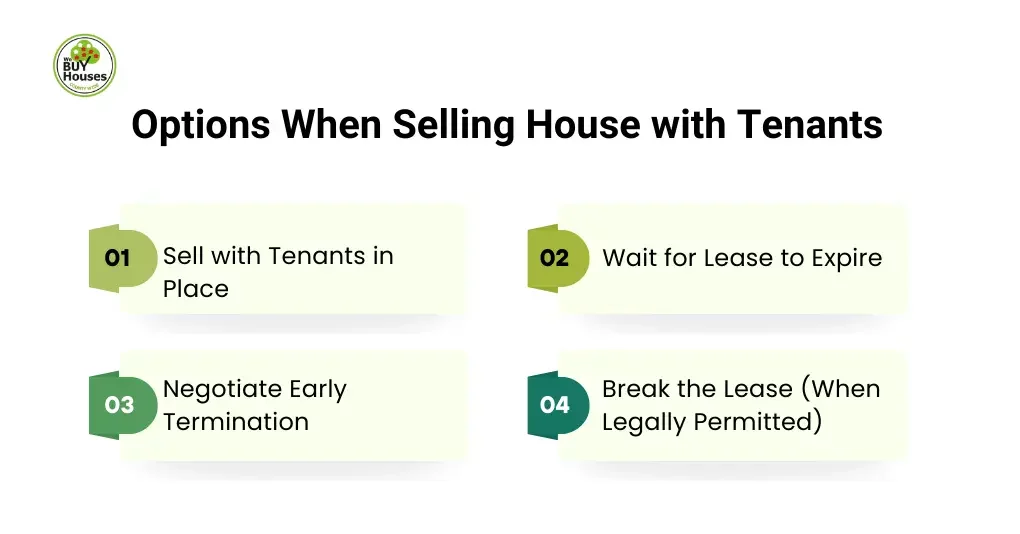
When selling a tenant-occupied property, landlords can sell with tenants in place or wait until the lease expires. The right choice depends on tenant rights, lease terms, and market conditions. Each option has its own advantages and challenges, so it is important to select the one that best aligns with your goals and timeline.
Option 1: Sell with Tenants in Place
Selling with tenants in place is the most seamless route for landlords who want to maintain continuous cash flow. By selling the property as an active rental, you avoid void periods where you would otherwise pay the mortgage out of pocket. This approach specifically targets real estate investors who value immediate rental income and a turnkey asset. While it saves you from eviction costs and redecoration expenses, it can limit your appeal to owner-occupant buyers who generally require a vacant home at the time of closing.
Option 2: Wait for the Lease to Expire
Waiting for the lease to naturally end allows you to sell the property to the widest possible audience, including first-time homebuyers and families. Once the tenant moves out, you gain total control over the showing schedule and the ability to paint, repair, or stage the home, making it the best time to sell your house. Although this eliminates the need for tenant negotiations or legal hurdles, the primary disadvantage is the financial burden of covering the mortgage, taxes, and utilities while the property sits vacant during the listing and escrow period.
Option 3: Negotiate Early Termination
If you need to sell a vacant property quickly but the lease is still active, you can negotiate a voluntary move-out using a Cash for Keys agreement. This involves offering the tenant a financial incentive, such as relocation assistance, in exchange for their vacating before their lease expires. It is an effective, non-adversarial way to accelerate your timeline and open the property to owner-occupants without the costs of a formal eviction. To ensure success, this agreement must be documented in writing, with payment released only upon return of the keys and inspection of the property.
Option 4: Break the Lease (When Legally Permitted)
Breaking a lease without a tenant’s consent is a last resort governed by strict state laws and specific contract language. This is typically only possible if your lease includes a “Sale to Terminate” clause, which allows cancellation with proper notice (usually 30 to 90 days) upon execution of a signed sales contract. Without such a clause, you generally cannot terminate the agreement unless the tenant has committed a material breach, such as non-payment of rent. Pursuing this option without clear legal grounds is risky and can lead to lawsuits or a derailed sale, so professional legal guidance is essential.
Common Challenges and Solutions
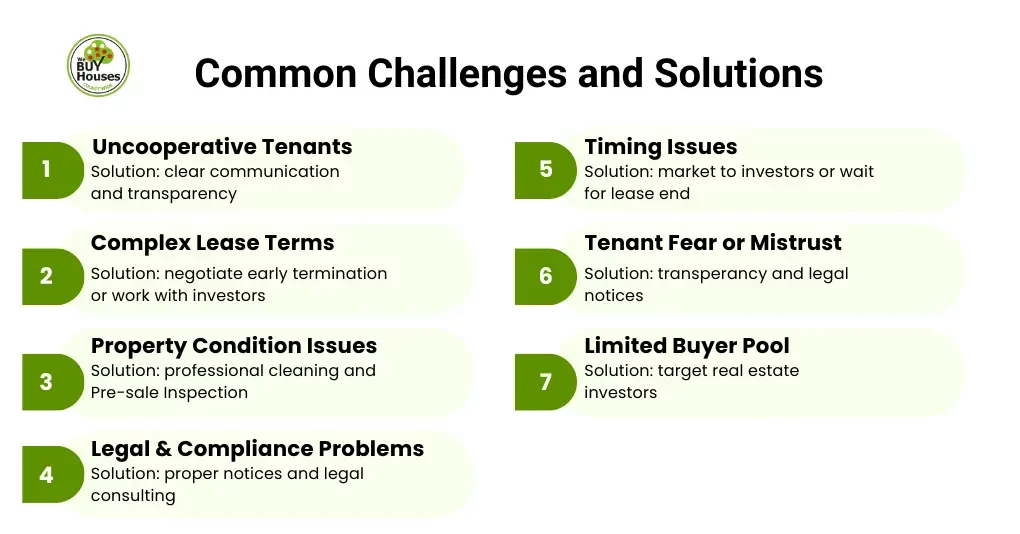
Selling a tenant-occupied property can pose challenges, including uncooperative tenants, lease term complications, legal compliance requirements, and the property’s condition. These obstacles can delay the sale, cause legal issues, and complicate negotiations. However, with the right strategies, these challenges can be managed effectively.
Uncooperative Tenants
Tenants may resist showings, refuse to move out, or express concerns about eviction. To resolve this, landlords should initiate clear communication, transparency, and offer financial incentives like cash-for-keys to help resolve these issues
Lease Terms That Complicate Sales
Lease clauses, such as long-term agreements, rent control, or right-of-first-refusal provisions, can limit buyer flexibility. Landlords can negotiate early termination or work with investors familiar with complex leases. Understanding lease terms and consulting legal experts can help landlords navigate these restrictions.
Property Condition Issues
A tenant-occupied home may not always be in show-ready condition, as residents may have little incentive to keep the property pristine for your listing. To maintain marketability, consider offering a professional cleaning service or a small thank-you credit to the tenant for keeping the home tidy during showings. Conducting a pre-sale inspection to address minor repairs yourself ensures that potential buyers see a well-maintained asset rather than a project.
Legal & Compliance Problems
Failing to comply with tenant protection laws, eviction timing, or notice requirements can delay or derail the sale. Landlords should ensure all notices are delivered correctly and on time, and consult with legal professionals to avoid missteps. This ensures the total costs of selling a house remain predictable and protected.
Timing Issues
Misalignment between a buyer’s desired move-in date and the tenant’s lease expiration is a common timing conflict. If you are selling to an owner-occupant, you may need to wait until the lease expires or use a lease termination clause if your contract allows it. For a faster exit, marketing to investors who prefer the property occupied can eliminate timing friction entirely, as they are often flexible with their start dates.
Tenant Fear or Mistrust
Mistrust often arises when tenants feel kept in the dark about a sale. Rebuilding that trust requires a high level of transparency; providing a formal Notice of Intent to Sell can help set clear expectations. Remind tenants that their original lease terms remain valid under new ownership, protecting them from sudden rent hikes or immediate eviction, thereby significantly reducing their anxiety.
Limited Buyer Pool
Tenant-occupied homes typically attract a smaller pool of buyers, as many owner-occupants are unwilling to navigate existing leases. To overcome this, focus your marketing strategy on real estate investors who view a reliable tenant as a value-add rather than an obstacle. Clearly disclosing the rent roll, payment history, and lease terms in your listing will attract serious buyers who are ready to take over as the new landlord. Additionally, selling without a realtor is an alternative strategy to broaden your options in a limited market.
Concluding the House Sale and Transferring Ownership
As the sale of a tenant-occupied property nears completion, landlords need to ensure a smooth closing and legal transfer of ownership. Completing key steps, such as transferring the leases and notifying the tenant promptly, can help reduce your closing costs by preventing legal delays and ensuring that both the buyer and the tenant are fully informed.
To ensure a smooth transition when selling a house with a tenant, landlords must focus on the following tasks:
- Transferring the Lease: Officially transfer the lease to the new owner, ensuring that all terms, including rent payments and tenant rights, are upheld.
- Notifying the Tenant: Provide formal notice of the sale to the tenant, including the new owner’s contact information and instructions for future rent payments.
- Handling the Security Deposit: Transfer the tenant’s security deposit, including any accrued interest, to the new owner at closing, as the buyer assumes responsibility for returning it to the tenant.
Conducting a Final Walkthrough: Walk through the property to document its condition and ensure it aligns with the sale terms, addressing any necessary repairs or cleaning before the new owner takes possession.